Safety Harness
In 2025, falls remain the #1 cause of death in construction worldwide. Not machinery failure. Not electrocution. Falls.
According to the U.S. Bureau of Labor Statistics (BLS), 421 construction workers died from falls to lower levels in the most recent comprehensive report (2023 data, released 2024). That’s roughly 1 in 3 construction fatalities. The Occupational Safety and Health Administration (OSHA) confirms falls consistently lead the “Fatal Four” hazards list.
Here’s the uncomfortable truth: most of those deaths were preventable.
A properly selected and correctly used safety harness could have made the difference.
As a safety training consultant working with HSE professionals in the UAE and India for over a decade, I’ve seen both sides—sites where harness compliance is meticulous, and sites where it’s treated like a box to tick. The difference in risk? Night and day.
Let’s break this down clearly—what a safety harness actually is, how it works, how to choose the right one, and where people make dangerous mistakes.
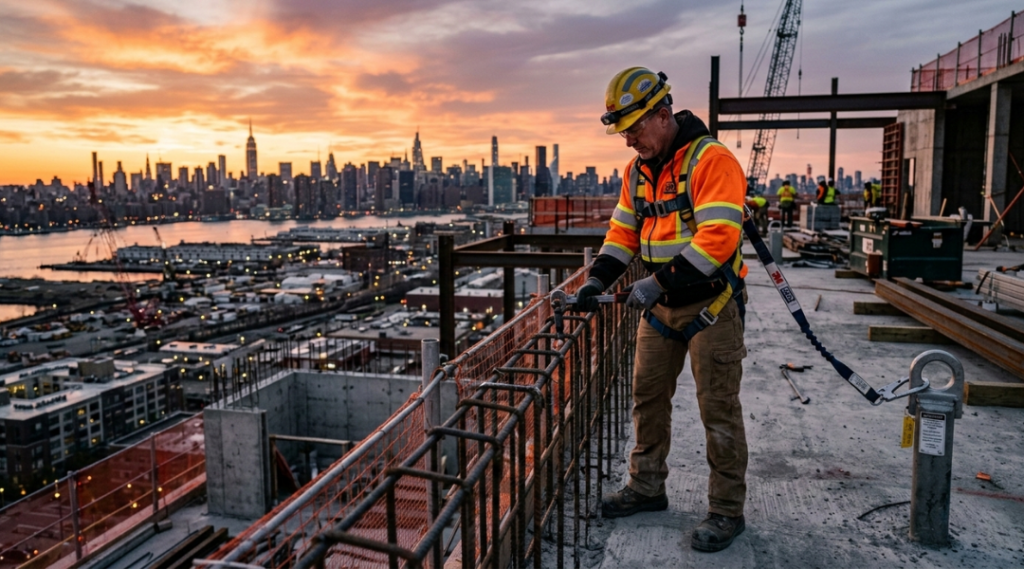
What Is a Safety Harness?
A safety harness is a full-body personal protective equipment (PPE) system designed to arrest a fall and distribute impact forces safely across the body. It works by connecting the worker to an anchor point using a lanyard or self-retracting lifeline (SRL), preventing ground impact. OSHA requires fall protection at 6 feet in construction and 4 feet in general industry.
Unlike older body belts (which OSHA banned for fall arrest in 1998), modern full-body harnesses distribute force across thighs, pelvis, chest, and shoulders—reducing internal injuries during a fall.
Why Safety Harnesses Matter More in 2026 Than Ever
Quick answer: Because work at height is increasing, regulations are tightening, and penalties are harsher than ever.
Construction output globally is projected to reach $15 trillion by 2030 (Oxford Economics). That means more scaffolds. More rooftops. More steel structures. More exposure.
And enforcement? It’s rising too.
According to OSHA’s 2024 enforcement summary, fall protection violations were the most cited safety standard for the 13th consecutive year. That’s not a coincidence—it’s a pattern.
Here’s what’s changed in the last five years:
Increased use of temporary works and modular construction
More gig-based subcontract labor (often undertrained)
Higher regulatory penalties (OSHA maximum fines exceed $16,550 per serious violation in 2025)
But here’s the kicker:
Many workers wear a harness—and still remain at risk.
Why? Because compliance isn’t competence.
I once audited a Dubai high-rise project where every worker wore a harness. Impressive at first glance. But half were clipped to scaffolding rails not rated as anchor points. In a fall scenario? The entire rail could detach.
A harness without a certified anchor is like a seatbelt bolted to cardboard.
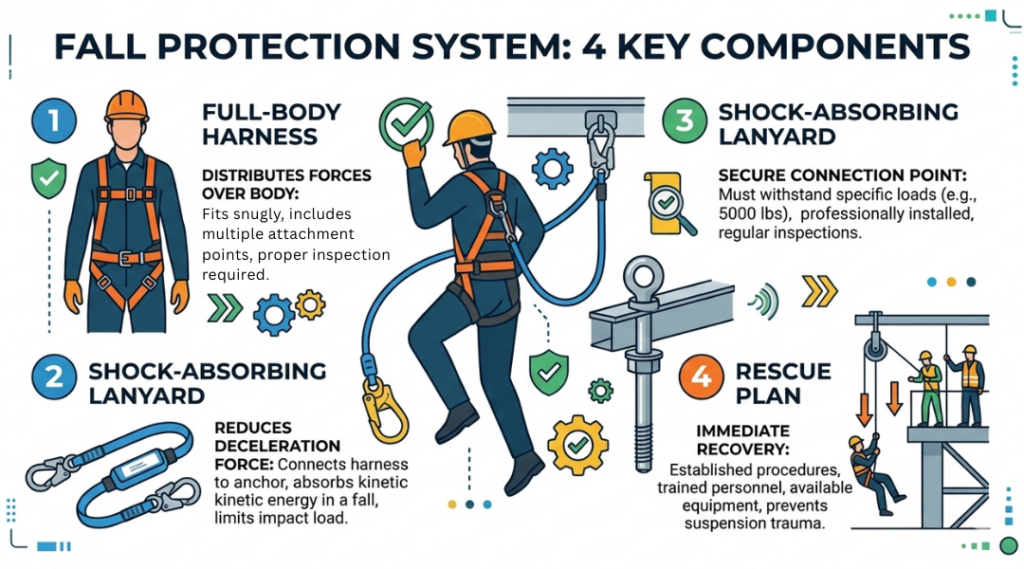
The 4-Part Fall Protection System (How a Safety Harness Actually Works)
Fall protection isn’t just “wear a harness.” It’s a system.
Think of it as four interconnected components:
1. Full-Body Harness
The wearable component that distributes fall forces.
Must meet ANSI Z359 (USA) or EN 361 (Europe) standards
D-ring location (dorsal, sternal, side) determines function
Should limit arrest force to under 1,800 lbs per OSHA guidelines
Insert image here:
Alt text: “Full-body safety harness with dorsal D-ring and adjustable leg straps”
2. Connecting Device (Lanyard or SRL)
This links the harness to the anchor point.
Shock-absorbing lanyards reduce impact forces
Self-retracting lifelines (SRLs) minimize free-fall distance
Maximum free fall allowed: 6 feet (OSHA 1926.502)
SRLs are increasingly preferred on industrial sites because they reduce fall clearance requirements.
3. Anchor Point
The anchor must support 5,000 pounds per attached worker, per OSHA standards.
That’s where many failures happen.
Handrails, cable trays, light fixtures? Not anchors.
Certified structural beams or engineered anchor systems? Yes.
4. Rescue Plan
This is the part competitors barely discuss.
OSHA requires employers to provide prompt rescue after a fall. Suspension trauma can begin within 10–15 minutes, according to research published in the Journal of Occupational Medicine.
Wearing a harness is step one. Having a rescue procedure is step two. Ignoring rescue planning? Dangerous.
Types of Safety Harnesses: Which One Should You Buy?
Not all harnesses are equal. And yes—this is where transactional intent comes in.
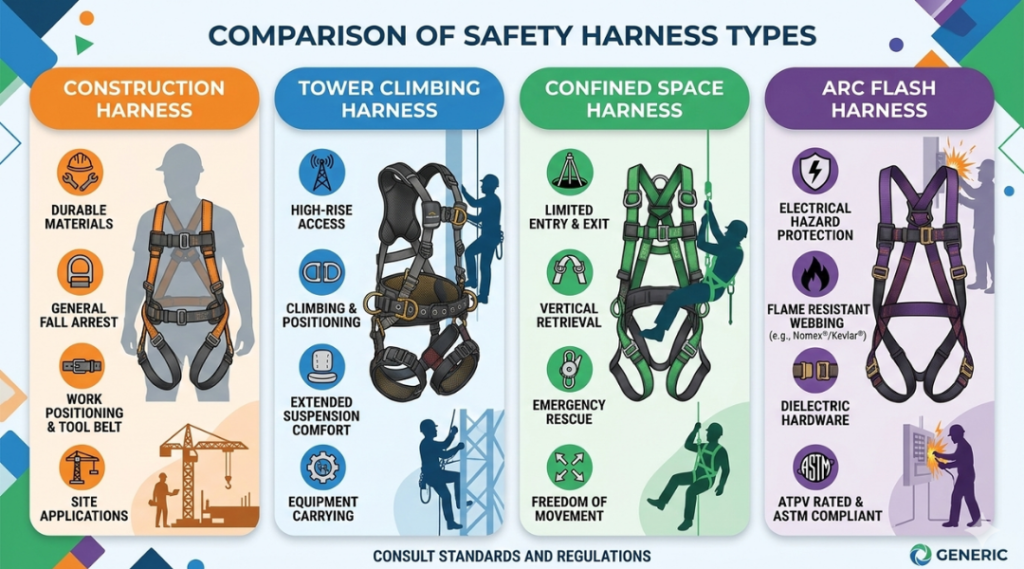
Here’s a simplified comparison:
Basic Construction Harness
Best for: General construction, roofing
Pros: Affordable, lightweight
Cons: Limited attachment options
Tower Climbing Harness
Best for: Telecom and wind turbine technicians
Pros: Extra lumbar support, positioning D-rings
Cons: Slightly heavier
Confined Space Harness
Best for: Tank entry, sewer work
Pros: Shoulder D-rings for vertical retrieval
Cons: Specialized use only
Arc Flash Rated Harness
Best for: Electrical and high-voltage work
Pros: Flame-resistant materials
Cons: Higher cost
Now, you might be wondering: How much should I actually spend?
In 2026, quality full-body harnesses range from $80 to $450 depending on certifications, comfort features, and brand (3M DBI-SALA, Honeywell Miller, and MSA Safety are industry leaders).
My honest opinion?
Don’t buy the cheapest model if your team works at height daily. Comfort affects compliance. Discomfort leads to shortcuts.
And shortcuts kill.
Common Mistakes That Make Safety Harnesses Fail
Let’s get real for a second.
Most accidents aren’t caused by defective equipment. They’re caused by human behavior.
Here are five critical mistakes:
Improper fit: Loose leg straps increase internal injury risk.
Expired equipment: Webbing degrades from UV exposure.
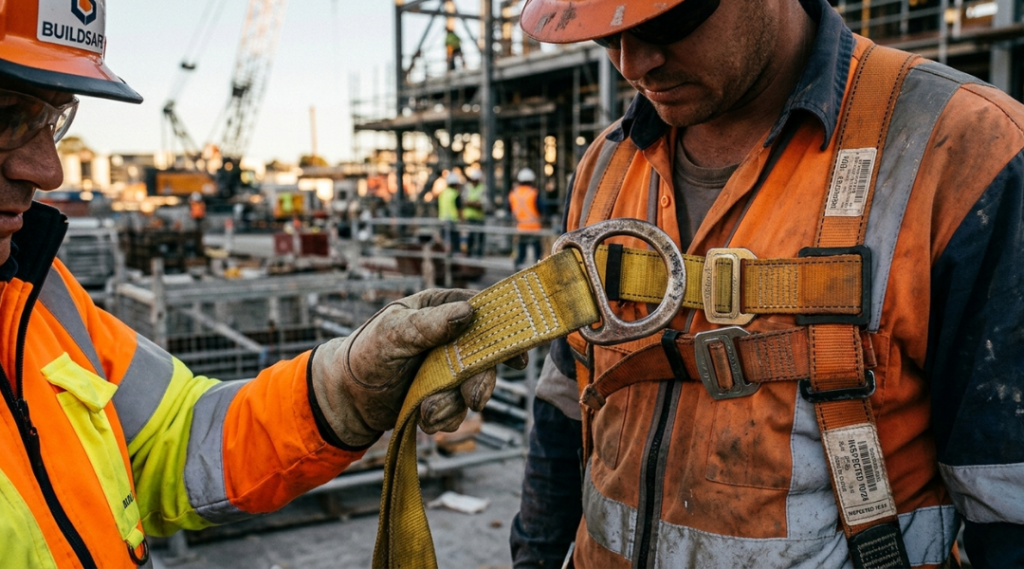
No pre-use inspection: Cuts, frays, or chemical damage go unnoticed.
Improper anchorage selection: As mentioned earlier.
No rescue readiness: Workers left suspended too long.
According to the UK’s Health and Safety Executive (HSE), inadequate fall protection planning contributed to a significant portion of workplace height-related incidents.
Here’s a story I’ll never forget:
In 2024, a site supervisor in Chennai insisted on monthly harness inspections. Workers complained it was excessive. Two months later, a routine inspection found stitching separation on a lanyard. That lanyard failed a tensile test.
That inspection likely saved a life.
Benefits of Using a Properly Selected Safety Harness
When used correctly, a safety harness:
Prevents fatal ground impact
Reduces liability and regulatory penalties
Boosts worker confidence at height
Improves insurance compliance ratings
For HSE managers in the UAE and globally, compliance with local regulations (like UAE Federal Law No. 8 of 1980 on labor safety) often requires documented fall protection programs.
But here’s the nuance:
A harness doesn’t eliminate risk. It mitigates it.
If your team frequently works at height without engineered guardrails or fall prevention systems, a harness is essential—but prevention controls should always come first.
Hierarchy of controls still applies.
Frequently Asked Questions
Not always—but it’s required when working at heights of 6 feet (construction) or 4 feet (general industry) under OSHA regulations. Local regulations may differ internationally.
OSHA requires pre-use inspection before every shift and formal inspection by a competent person at least annually. Many companies conduct quarterly checks.
No. If a harness has arrested a fall, it must be removed from service immediately, even if no visible damage exists.
Typically 3–5 years, depending on manufacturer guidelines and environmental exposure. Always follow manufacturer instructions.
Body belts concentrate force on the abdomen and were banned for fall arrest in 1998. Full-body harnesses distribute force safely across major muscle groups.
Yes. OSHA mandates fall protection training to ensure workers understand hazard recognition, equipment limitations, and proper use.
Final Thoughts: What Actually Matters
After years in safety training, here’s what I’ve learned:
First: Buying a safety harness is easy.
Using it correctly? That takes culture.
Second: Anchor points matter more than the harness itself.
Third: Rescue planning is non-negotiable.
Whether you’re an HSE manager sourcing equipment or a worker trying to understand your protection system, a safety harness is more than gear—it’s a lifeline.
If you’re evaluating harness options for your site, compare certifications, check compliance with OSHA or EN standards, and ensure your team receives proper training.
Because at height, assumptions don’t forgive.