Risk Assessment: Complete Guide for Safer Workplaces
Introduction
Risk assessment is the foundation of workplace safety because it helps employers identify hazards, judge risk levels, and choose controls before people get hurt. That matters more than ever because work-related harm remains a major global issue, with the ILO reporting 2.93 million work-related deaths each year and 395 million non-fatal work injuries worldwide.
A good risk assessment is not just paperwork. It is a practical decision-making tool. It tells you what can cause harm, who may be affected, how serious the exposure is, and what action should happen next. HSE says employers must make a “suitable and sufficient” assessment of risks to workers and others, then review that assessment when needed.
If this process is done well, safety becomes clearer. Managers can prioritize action. Supervisors know what to control. Workers understand what is expected. That is why risk assessment sits at the center of health and safety management across construction, manufacturing, logistics, facilities, hospitality, healthcare, and office environments.
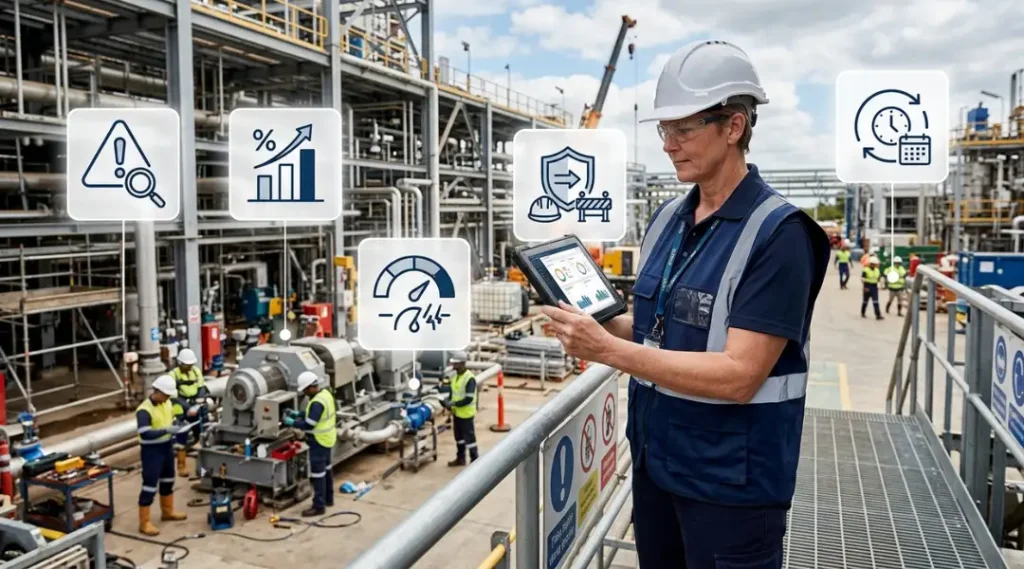
Quick Summary
- Risk assessment identifies hazards, evaluates risk, and sets controls.
- HSE’s five-step model remains the clearest starting framework.
- The strongest controls sit higher in the hierarchy of controls.
- Fire, operational, task-based, and dynamic assessments each serve different purposes.
- Training matters when organizations want better consistency and stronger judgment in real workplaces.
What Is Risk Assessment?
Risk assessment is the structured process of identifying workplace hazards, evaluating how likely and how severe harm could be, and deciding what control measures are needed. Unlike a casual safety check, it creates a repeatable method for preventing injury, illness, property loss, and operational disruption.
Risk assessment is a suitable and sufficient review of workplace hazards and the risks they create. It works by identifying what may cause harm, judging the level of risk, and applying controls. Unlike reactive incident response, it helps prevent loss before it happens. HSE continues to position it as a core employer duty.
At a simple level, hazard and risk are not the same thing. A hazard is something with the potential to cause harm. Risk is the chance that harm will happen, combined with how serious that harm may be. That difference matters because many teams spot hazards but fail to judge exposure properly.
Think of risk assessment like a map before a long drive. The road may still contain dangers, but the driver who knows the route, the blind spots, and the weather has a much better chance of arriving safely.
Why Risk Assessment Matters in 2026
Risk assessment matters in 2026 because employers face pressure from three directions at once: legal duty, operational risk, and workforce expectations. It is still the fastest way to prevent harm, prioritize resources, and show that safety decisions are sensible, proportionate, and documented.
The first reason is scale. Work-related injuries and illness are still widespread globally, and the ILO’s latest published figures remain severe enough to show that poor prevention carries human and business costs at a massive level. A workplace that skips structured assessment is not saving time. It is borrowing trouble.
The second reason is accountability. HSE states that employers must assess risks to employees and others. It also says businesses with five or more employees must record significant findings, including hazards, who may be harmed, and what controls are in place. That means risk assessment is not optional once real work activity creates risk.
The third reason is practical control. OSHA’s guidance on hazard identification tells employers to collect existing hazard information, inspect the workplace, investigate incidents, consider emergency and nonroutine work, and prioritize hazards for control. That is not theory. It is a direct path to fewer surprises on the job.
One thing many guides miss is this: risk assessment is not valuable because it produces a document. It is valuable because it improves judgment. The document is only proof of the thinking.
How Risk Assessment Works
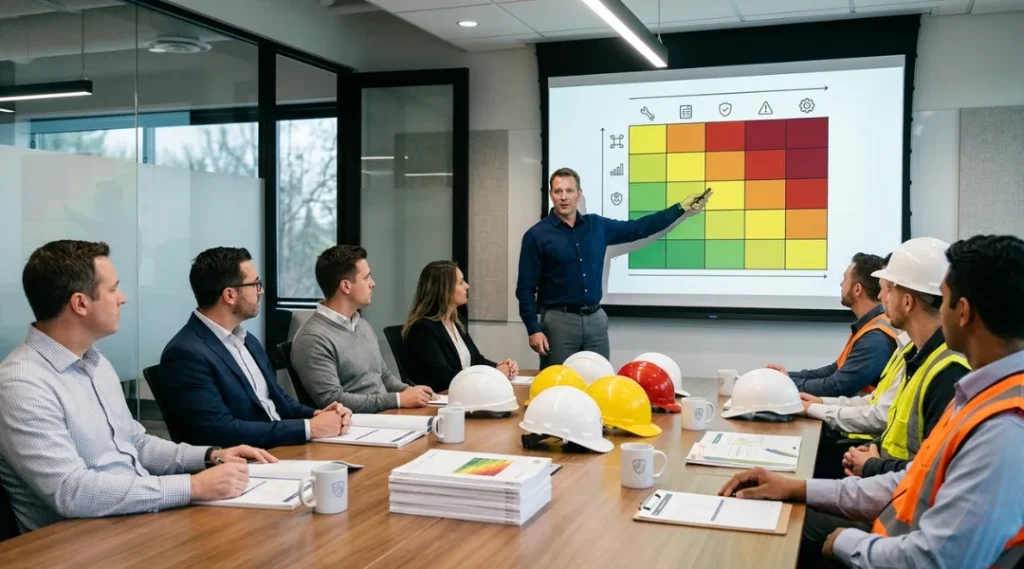
Risk assessment works by moving from observation to judgment to control. You identify hazards, decide who might be harmed, evaluate likelihood and severity, implement suitable controls, record significant findings where required, and review the assessment when work conditions change.
Step 1: Identify the hazards
Start by looking at what can cause harm. HSE says this means examining how people work, how equipment is used, what substances are present, what work practices exist, and the general condition of the premises. OSHA adds incident history, emergency situations, and nonroutine work to that picture.
This is where site walks, inspections, job observations, maintenance records, safety data sheets, and worker interviews become useful. If forklift traffic crosses pedestrian routes, that is a hazard. If cleaning chemicals are stored badly, that is a hazard. If lone workers handle aggression risks, that is a hazard too.
Step 2: Decide who might be harmed and how
The next step is not just listing “employees.” It is identifying exposed groups clearly. That may include operators, contractors, visitors, cleaners, maintenance teams, delivery staff, young workers, pregnant workers, or people with limited mobility. Strong assessments are specific because controls must match real exposure.
Step 3: Evaluate the risk
Now judge how likely the hazard is to cause harm and how severe the outcome could be. This is where a risk matrix often helps. A low-frequency paper cut is not the same as a fall from height, live electrical exposure, or an uncontrolled fire load. The aim is sensible prioritization, not false precision.
Step 4: Select and apply controls
Control selection should follow the hierarchy of controls. OSHA describes this as ranking safeguards from most effective to least effective. NIOSH lists the order as elimination, substitution, engineering controls, administrative controls, and PPE. In plain terms, remove the danger first if possible; do not jump straight to helmets and warning signs.
A slippery walkway may need resurfacing, drainage improvement, and pedestrian separation before it needs signs. A noisy machine may need enclosure or replacement before it needs hearing protection. What I’ve seen work best is starting at the top of the hierarchy and only moving downward when higher-level controls are not reasonably achievable.
Step 5: Record and review
If you employ five or more people, HSE says you must record significant findings. That includes the hazards, who might be harmed, and what you are doing to control the risks. The review step matters just as much. New equipment, layout changes, incidents, complaints, or process updates should trigger another look.
A risk assessment should act like a live control document, not a dead file. If it sits untouched for a year while the workplace changes around it, it is already losing value.
What Are the Main Types of Risk Assessment?

The main types of risk assessment include general workplace assessments, task-based assessments, fire risk assessments, dynamic risk assessments, and specialist assessments for areas such as chemicals, noise, manual handling, or process safety. Each type exists because different hazards need different depth, timing, and technical judgment.
General risk assessment
This is the broad workplace review most businesses start with. It looks at common hazards across a site, department, or activity and sets baseline controls.
Task-based risk assessment
This focuses on a specific job or operation. It is often paired with a method statement, permit system, or job safety analysis when the work contains defined hazards.
Fire risk assessment
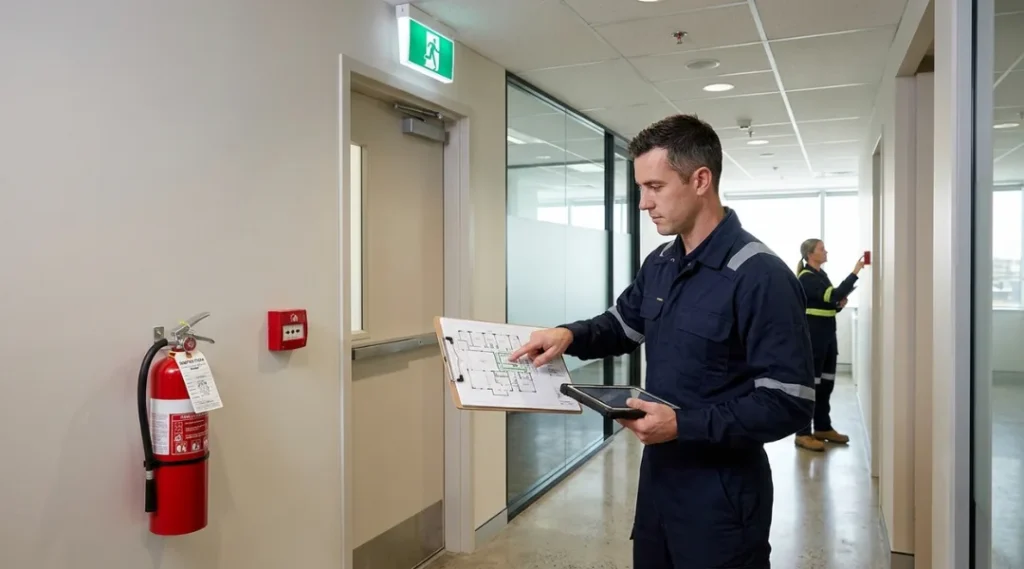
This goes deeper into fire hazards, ignition sources, fuel load, means of escape, fire protection systems, emergency planning, and vulnerable occupants. ProQual states its Level 5 Diploma in Fire Safety and Risk Management is aimed at people responsible for carrying out fire risk assessments on different property types.
Dynamic risk assessment
This is used when conditions change quickly and decisions must be made in real time. Emergency response, maintenance callouts, field work, and high-variation environments often need it.
Strategic or enterprise risk assessment
This sits above task-level safety and looks at operational, strategic, financial, compliance, reputational, and continuity risks. M2Y’s OTHM Level 7 Diploma in Risk Management positions this as enterprise-wide risk leadership, with topics such as ERM frameworks, risk appetite, and board-level reporting.
Which Workplace Hazards Should Be Assessed?
A workplace should assess any hazard that can realistically cause harm, including physical hazards, health hazards, fire risks, equipment risks, vehicle movement, work at height, electrical risks, manual handling, environmental exposures, and nonroutine work. The exact list varies by sector, but the principle does not.
Common examples include slips and trips, poor housekeeping, machinery contact, vehicle collisions, falling objects, chemical exposure, dust, noise, heat stress, awkward lifting, confined spaces, electrical faults, fatigue, violence, lone working, and emergency evacuation failures. OSHA also highlights incident investigations and emergency or nonroutine situations as important sources of hazard identification.
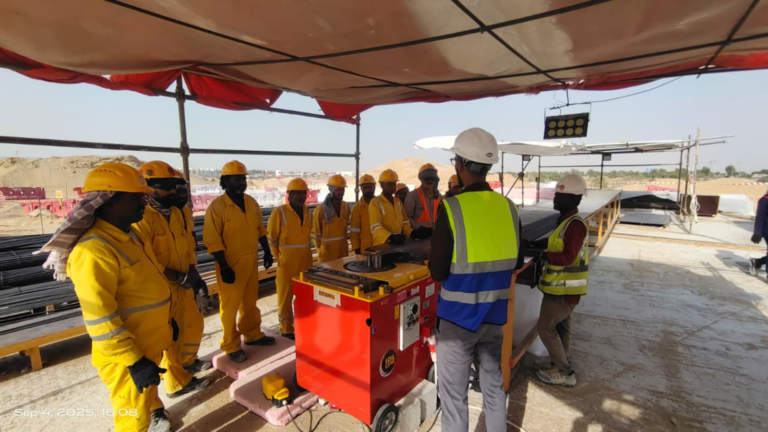
The key is relevance. A warehouse, hotel kitchen, hospital, tower construction site, and corporate office will not share the same top five risks. Good risk assessment is context-specific. It asks, “What can go wrong here, with these people, during this work, under these conditions?”
Best Methods and Tools for Risk Assessment
The best risk assessment methods are the ones that make hazards visible, decisions consistent, and controls practical. For most workplaces, that means using a simple five-step assessment framework, a clear risk matrix, direct site observation, worker input, and the hierarchy of controls to choose measures that actually reduce exposure.
The comparison below reflects common workplace approaches and official control principles from HSE, OSHA, and NIOSH.
| Method or Tool | Best For | Key Strength | Limitation |
|---|---|---|---|
| HSE 5-step approach | General workplace use | Simple and easy to apply | Can be too broad for complex tasks |
| Risk matrix | Prioritizing action | Helps rank likelihood and severity | Quality depends on assessor judgment |
| Site inspection and observation | Live hazard spotting | Finds real-world conditions fast | Misses hidden or irregular exposures |
| Job/task risk assessment | Specific operations | Better control for defined tasks | Needs frequent updates |
| Hierarchy of controls | Choosing controls | Pushes teams toward stronger solutions | Requires discipline to avoid defaulting to PPE |
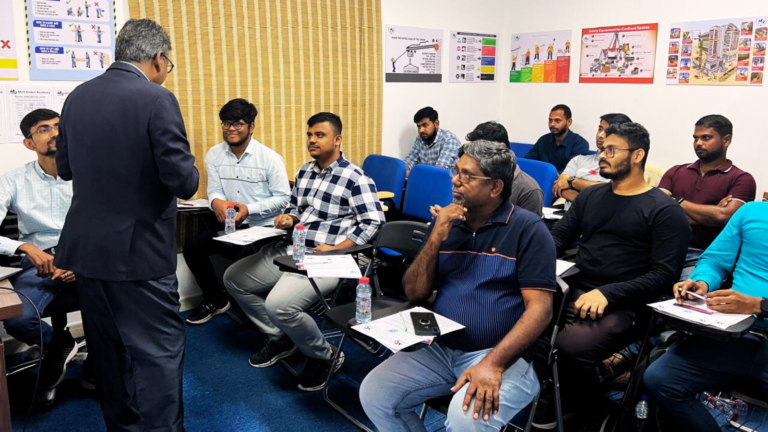
Training also matters when businesses want more than a template. They want consistent thinking. For that, three learning pathways are especially relevant on your site. Course details below come from NEBOSH, ProQual, OTHM, and the M2Y course pages.
| Qualification | Best For | Format / Level | Practical Outcome |
|---|---|---|---|
| NEBOSH HSE Award in Managing Risks and Risk Assessment at Work | Supervisors, team leaders, managers | One-day qualification | Builds practical risk assessment competence |
| ProQual Level 5 NVQ Diploma in Fire Safety and Risk Management | Fire safety professionals moving into leadership | Level 5 work-based diploma | Builds fire risk assessment and fire safety leadership capability |
| OTHM Level 7 Diploma in Risk Management | Senior professionals and future risk leaders | Level 7, Master’s-equivalent, flexible online study | Builds enterprise and strategic risk management capability |
NEBOSH describes its HSE Award in Managing Risks and Risk Assessment at Work as a one-day qualification that provides practical skills for health and safety risk management. M2Y’s page adds that it covers hazard identification, risk evaluation, hierarchy of controls, the five-step approach, documentation, and review.
ProQual’s qualification specification says the Level 5 Diploma is aimed at candidates responsible for carrying out fire risk assessments on different property types. M2Y positions it as an advanced qualification for fire safety professionals who want leadership-level responsibility.
For broader leadership, OTHM’s Level 7 Diploma in Risk Management is structured as a 120-credit qualification, and M2Y presents it as a Master’s-equivalent route focused on enterprise risk management, strategic reporting, and wider organizational risk.
Benefits of Risk Assessment
Risk assessment delivers four core benefits: fewer incidents, clearer priorities, better compliance evidence, and stronger operational control. It helps organizations act before loss occurs, which is why it remains one of the most practical tools in any safety management system.
The first benefit is prevention. Hazards that are identified early are easier to control. OSHA even notes that some hazards, such as housekeeping and tripping hazards, should be fixed as they are found. That one point captures the value of the whole process: faster identification leads to faster correction.
The second benefit is better decision-making. Once risks are ranked, managers stop treating every issue as equally urgent. Resources can move toward high-severity and high-exposure problems first.
The third benefit is defensible compliance. HSE expects risk assessments to be suitable, sufficient, and reviewed. Recording significant findings gives organizations a clearer trail of what was identified, what action was chosen, and what still needs follow-up.
The fourth benefit is capability growth. Formal training helps standardize quality across teams. NEBOSH RAW helps build core competence quickly. The ProQual Level 5 route is more suitable for advanced fire safety responsibility. OTHM Level 7 fits professionals who need strategic or enterprise-level risk leadership.
When does risk assessment not work well? Usually in three situations: when it is copied from an old template, when assessors do not understand the job, or when controls are written down but never implemented. The failure is rarely the format. It is usually weak observation, weak judgment, or weak follow-through.
Common Risk Assessment Mistakes
The most common risk assessment mistake is treating the process as a formality, which leads to generic hazards, weak controls, and poor follow-up. A bad assessment may still look complete on paper, but it will not guide real work safely.
Using a template without checking real conditions
Templates are useful starting points, not finished assessments. Every site has its own layout, people, equipment, timing, and exposure patterns.
Confusing hazards with controls
Some assessments jump straight to PPE and signage without defining the actual hazard clearly. That creates weak control logic from the start.
Ignoring who is actually exposed
A risk can look minor from a manager’s desk and look serious to the contractor, cleaner, or operator standing in the task every day.
Scoring everything as “medium”
This is common when teams want to avoid hard decisions. But if every risk is medium, then nothing is prioritized.
Failing to review after change
HSE expects review when necessary. New tools, process changes, complaints, incidents, or staffing patterns can all change exposure.
Writing controls that are too vague
“Be careful” is not a control. “Install edge protection, inspect weekly, assign supervisor sign-off, and restrict access below” is a control.
In my experience, the strongest improvement often comes from one simple change: make the assessor spend more time at the job and less time at the desk.
Frequently Asked Questions
Risk assessment questions usually focus on definition, legal duty, first steps, documentation, and who should carry out the work. The answers below cover those practical issues directly and keep the focus on how the process is used in real workplaces.
The first step is identifying hazards. HSE says employers should look at how people work, how equipment is used, what substances are present, what practices exist, and the condition of the premises.
A competent person should carry it out, but the best assessments also involve workers and supervisors who understand the job. OSHA specifically recommends involving workers because they often know the conditions that create hazards and how they can be controlled.
Any employer with workplace risks needs to assess them. HSE says employers must make a suitable and sufficient assessment of risks to employees and others. If there are five or more employees, significant findings must be recorded.
It should be reviewed whenever there is reason to think it is no longer valid or when significant changes occur. Incidents, new equipment, new layouts, new substances, or changed work methods are common triggers.
A general risk assessment covers broad workplace hazards. A fire risk assessment focuses specifically on ignition sources, combustible materials, detection, protection, escape, emergency arrangements, and fire safety management. ProQual’s Level 5 Diploma is designed for people responsible for carrying out fire risk assessments.
That depends on the level you need. NEBOSH RAW suits supervisors and managers who need practical risk assessment skills fast. ProQual Level 5 suits professionals handling advanced fire risk responsibilities. OTHM Level 7 suits senior professionals moving into strategic or enterprise risk leadership.
What to Learn Next
The next topics after this guide are usually more specific: fire risk assessment, workplace risk assessment templates, hierarchy of controls in practice, and strategic risk management for senior roles. Those follow-up topics are useful because they move from broad understanding into targeted implementation and career development.
- How to carry out a fire risk assessment
- How to use a workplace risk assessment template properly
- How the hierarchy of controls changes control decisions
- How supervisors can improve risk assessment quality
- How enterprise risk management differs from site-level safety risk assessment
Conclusion
Risk assessment remains the clearest way to turn workplace safety from guesswork into controlled action. It helps identify hazards, rank priorities, and apply better controls before harm occurs. When done properly, it improves compliance, strengthens judgment, and supports safer day-to-day operations.
Three points matter most:
- A risk assessment must be practical, not generic.
- Strong controls start high in the hierarchy, not at PPE.
- The process only works when assessments are reviewed and acted on.
Ready to build stronger risk assessment skills? Start with the NEBOSH HSE Award in Managing Risks and Risk Assessment at Work for practical core competence, move into advanced fire leadership with the ProQual Level 5 NVQ Diploma in Fire Safety and Risk Management, or step into wider strategic leadership with the OTHM Level 7 Diploma in Risk Management.