ProQual Level 7 NVQ Diploma in Strategic Health & Safety Leadership and Management
Achieve the Pinnacle of Health and Safety Professional Excellence
Zero fatalities. Zero major injuries. A workplace where every person returns home safely, every day. This isn’t just a safety goal—it’s a moral imperative, a business necessity, and increasingly, a competitive advantage.
But achieving truly world-class safety performance requires more than systems and procedures. It demands strategic leadership at the highest organizational levels—leaders who understand that safety isn’t a separate function but a core business value integrated into every decision, every process, every interaction.
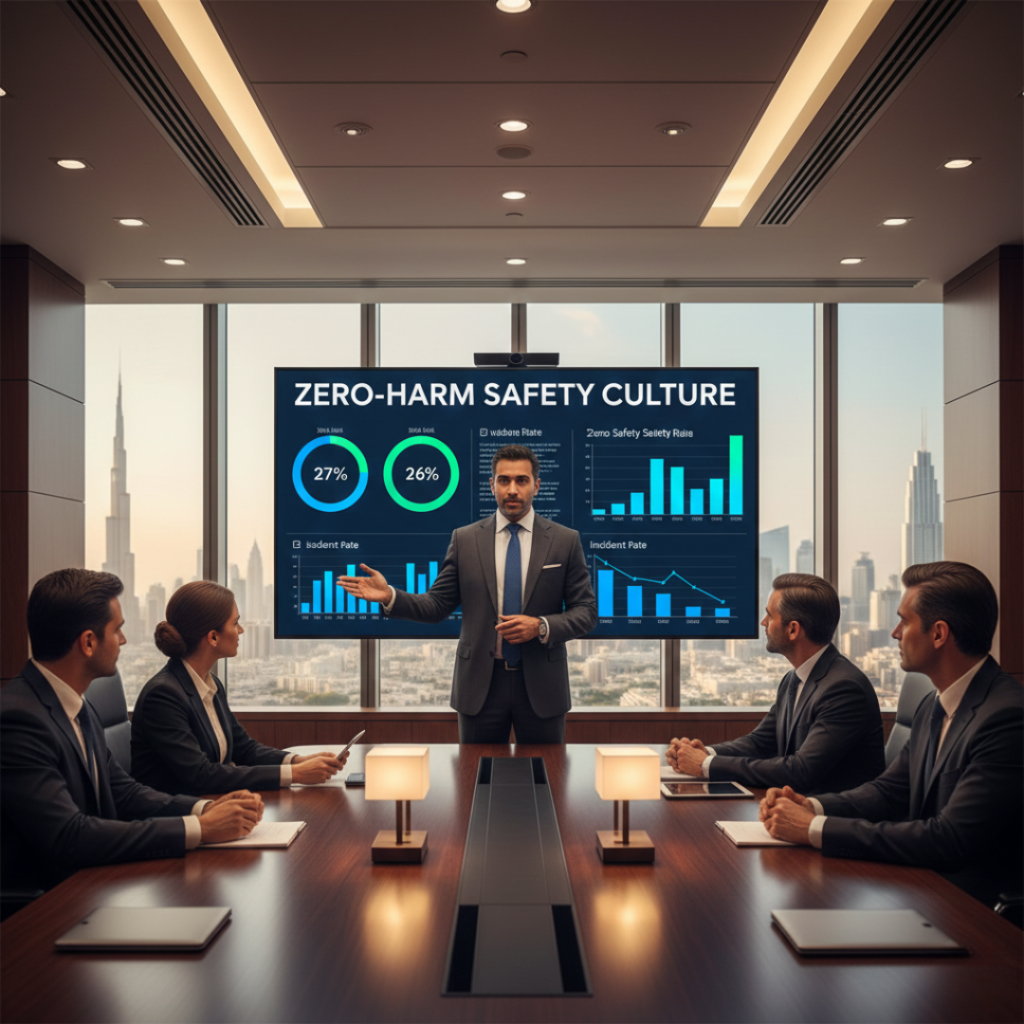
The ProQual Level 7 NVQ Diploma in Strategic Health & Safety Leadership and Management is the ultimate qualification for health and safety professionals operating at C-suite and executive levels. This master’s degree-level diploma validates your ability to shape organizational safety culture from the boardroom, influence business strategy through safety excellence, and lead transformational safety performance improvement.
At M2Y Safety Consultancy, we develop safety leaders who don’t just manage safety—they architect organizational cultures where safety is genuinely valued, embedded, and sustainable. Leaders who prove that exceptional safety performance and exceptional business performance are inseparable.
This is health and safety leadership at its absolute highest expression.
Understanding Level 7 Leadership Distinction
Master’s-Level Professional Qualification:
Level 7 represents master’s degree/postgraduate level—the highest professional qualification available:
- Equivalent to MA/MSc
- Postgraduate diploma level
- Professional qualification at master’s standard
From Management to Strategic Leadership:
| Level 6 (Degree Level) | Level 7 (Master’s Level) |
|---|---|
| Strategic HSE management | C-suite HSE leadership |
| Organizational safety transformation | Industry/sector safety influence |
| Implementing best practice | Creating innovative safety paradigms |
| Safety culture development | Cultural transformation at organizational DNA level |
| Board-level reporting | Board-level strategic influence |
| Evidence-based safety | Applied safety research and innovation |
Comprehensive Scope:
This qualification integrates:
- Strategic safety leadership
- Organizational culture transformation
- Safety in business strategy
- Applied safety research
- Innovation in safety practice
- Global safety excellence
- Safety thought leadership
Credit Value: 60+ credits at master’s level
Duration: 24-36 months
Commitment: Substantial—postgraduate professional education
Who Should Pursue This Elite Qualification?
Ideal Candidates:
✓ Chief Safety Officers / VPs of HSE in major organizations
✓ Group HSE Directors in multinational corporations
✓ Senior HSE Consultants at director/partner level
✓ Safety Researchers combining academic and professional work
✓ Industry Safety Leaders shaping sector safety standards
✓ Government Safety Advisors at policy-making levels
✓ Safety Entrepreneurs creating innovative safety solutions
Career Level: The highest professional qualification, typically for those with 12-15+ years of progressive safety leadership experience.
Prerequisites:
- Level 6 health and safety qualification (or relevant postgraduate degree)
- Extensive senior HSE leadership experience
- Evidence of strategic organizational influence
- Track record of safety transformation
- Research and analytical capabilities
- C-suite or equivalent access
Master's-Level Course Content
Core Strategic Leadership Units:
| Unit | Master’s-Level Focus | Transformational Application |
|---|---|---|
| Strategic Safety Leadership | Leading safety at C-suite and board level | Influence organizational strategy through safety |
| Cultural Transformation | Architecting sustainable safety cultures | Transform organizational DNA |
| Safety & Business Strategy | Integrating safety into competitive advantage | Position safety as business value driver |
| Applied Safety Research | Conducting rigorous safety research | Generate new safety knowledge |
| Innovation in Safety Practice | Creating novel safety solutions | Pioneer safety excellence |
| Global Safety Excellence | Operating in multinational contexts | Lead across cultures and borders |
Advanced Technical & Strategic Units:
- Major hazard and process safety leadership
- Human and organizational performance
- Catastrophic failure prevention
- Safety in complex systems
- Behavioral safety science
- Safety economics and business value
- Safety technology and digitalization
- Regulatory influence and policy
- Ethical safety leadership
Research & Professional Mastery:
- Advanced research methodology
- Critical analysis of safety literature
- Safety philosophy and ethics
- Professional competence at master’s level
- Contributing to safety profession globally
Strategic Safety Leadership in UAE Context
Why Master’s-Level Safety Leadership Matters in the UAE:
Mega-Projects:
- World’s largest infrastructure projects
- Complex, multinational contractor coordination
- Unprecedented scale and timeline pressures
- Zero-harm commitments to the world
High-Hazard Industries:
- Oil and gas production and refining
- Petrochemicals and industrial processes
- Nuclear energy (Barakah Nuclear Plant)
- Aviation and aerospace
- Construction of iconic structures
Regulatory Environment:
- Evolving safety regulations
- International standard compliance
- Free zone regulatory diversity
- Growing enforcement rigor
Cultural Complexity:
- 200+ nationalities in workforce
- Varied safety culture backgrounds
- Language and literacy challenges
- Cultural sensitivity in safety
Economic Importance:
- Major incidents can impact national economy
- International reputation at stake
- Foreign investment confidence
- Regional safety leadership
Vision 2030 and Beyond:
- Safety excellence as competitive advantage
- Sustainable development goals
- Worker welfare and human rights
- Corporate social responsibility
Level 7 professionals provide the strategic leadership capability to navigate these complexities and achieve world-class safety performance.
Master's-Level Leadership Competencies
1. C-Suite Safety Leadership
Operating at the highest organizational levels:
- Advising CEOs and boards on safety strategy
- Integrating safety into business planning
- Safety in mergers, acquisitions, divestitures
- Safety implications of business decisions
- Positioning safety as competitive advantage
2. Cultural Architecture
Designing sustainable safety cultures:
- Deep cultural assessment and diagnosis
- Culture change theory and application
- Transformational change leadership
- Values-based safety culture
- Measuring cultural maturity and evolution
- Sustaining culture beyond leadership changes
3. Applied Safety Research
Contributing to safety knowledge:
- Designing and conducting safety research
- Systematic literature reviews
- Evaluating intervention effectiveness
- Publishing safety research
- Presenting at international conferences
- Evidence-based safety practice
4. Innovation Leadership
Pioneering safety excellence:
- Novel approaches to persistent safety challenges
- Technology-enabled safety transformation
- Human and organizational performance (HOP)
- Safety differently paradigms
- Disruptive safety innovation
5. Global Safety Excellence
Leading multinational safety:
- Cross-cultural safety leadership
- Global safety standards harmonization
- International best practice integration
- Managing diverse safety expectations
- Multinational contractor safety
6. Major Hazard Leadership
Preventing catastrophic failures:
- Process safety leadership
- Catastrophic failure modeling
- Major hazard risk management
- Emergency preparedness at scale
- Learning from major incidents globally
Real-World Master's-Level Impact
Case Study: Oil & Gas Major, Middle East Operations
Context:
A global oil and gas company’s Middle East region (8,000 employees, 15,000 contractors across 4 countries) faced serious safety challenges despite substantial investment:
- Fatality rate above industry average
- Serious incident frequency unacceptable
- Inconsistent safety culture across operations
- Contractor safety management failures
- Regulatory scrutiny increasing
- Board concern about safety performance
- Reputation damage from incidents
The Situation:
- Previous safety initiatives had delivered limited sustained improvement
- Compliance-focused safety culture
- Safety seen as cost center, not value creator
- Management frustrated by “plateau” in safety performance
- Need for fundamental transformation, not incremental improvement
Solution:
The newly appointed Regional HSE Director (with Level 7 Diploma in Strategic H&S Leadership) led comprehensive safety transformation.
Master’s-Level Strategic Transformation:
Phase 1: Diagnosis & Strategy (Months 1-6)
Applied research and analysis:
- Comprehensive safety culture assessment (quantitative and qualitative)
- Root cause analysis of serious incidents (5 years)
- Benchmarking against safety-excellent organizations
- Systematic literature review of transformation approaches
- Stakeholder engagement (board to frontline)
Strategic plan developed:
- 5-year safety transformation strategy
- Culture change roadmap
- Leadership development program
- Contractor safety excellence initiative
- Technology and innovation program
- Performance measurement framework
Phase 2: Implementation (Months 7-24)
Cultural transformation initiatives:
- Executive safety leadership program (board + C-suite)
- Values-based safety culture (zero harm, care, excellence)
- Leadership in the field program
- Behavioral safety observation (non-punitive)
- Contractor safety partnership model
- Recognition and learning culture
Systemic improvements:
- Human and organizational performance (HOP) principles
- Critical risk management program
- Life-saving rules implementation
- Technology-enabled safety (IoT, AI, predictive analytics)
- Simplified safety management system
Phase 3: Sustainment (Months 25+)
Embedding transformation:
- Safety integrated into business processes
- Safety in performance management and incentives
- Continuous improvement mechanisms
- Knowledge management and learning
- Thought leadership and industry contribution
Results Achieved (36 Months):
Safety Performance Transformation:
- Fatality rate: ZERO (0.12 previously)
- Total Recordable Incident Rate reduced 81%
- Lost Time Injury Frequency Rate reduced 76%
- High-potential incidents reduced 84%
- Near-miss reporting increased 420% (cultural indicator)
- Safety culture maturity: Advanced from Level 2 (Reactive) to Level 4 (Proactive)
Business Impact:
- Operational uptime increased 8% (fewer safety disruptions)
- Insurance costs reduced 35%
- Regulatory violations: ZERO (9 in previous 3 years)
- Contract wins attributing to safety reputation
- Employee engagement improved 31%
- Contractor retention improved significantly
Strategic Achievements:
- Board champions of safety (transformed mindset)
- Safety integrated into business planning
- Regional safety benchmark for industry
- International safety awards won
- Research published in international journals
- Industry thought leadership established
Personal Recognition:
- Promoted to Global VP of HSE
- Salary increase >100%
- Industry awards for safety leadership
- Keynote speaker at international conferences
- Published author on safety transformation
- University adjunct professor (safety leadership)
The Distinction: The master’s-level qualification provided:
- Research capability to diagnose and design evidence-based transformation
- Strategic thinking to integrate safety into business strategy
- Change leadership knowledge to architect cultural transformation
- Credibility with board and C-suite
- Innovation to challenge conventional safety approaches
- Systems thinking to address complex, interconnected challenges
This level of transformation requires master’s-level professional competence that lower qualifications cannot deliver.
Assessment: Demonstrating Master's-Level Excellence
Comprehensive Assessment Portfolio:
1. Strategic Safety Leadership Portfolio
- Multi-year safety strategies developed
- Board-level presentations and influence
- Cultural transformation programs
- Strategic initiatives designed and led
- Business integration of safety
2. Applied Research Dissertation
- Original safety research (typically 12,000-15,000 words)
- Literature review and theoretical framework
- Rigorous methodology
- Data collection and analysis
- Findings and recommendations for practice
- Publishable academic standard
3. Thought Leadership Contributions
- Conference presentations
- Published articles
- Industry standard contributions
- Policy influence
- Professional community leadership
4. Critical Reflection at Master’s Level
- Critical analysis of professional practice
- Integration of theory and practice
- Professional development as safety leader
- Contribution to safety profession
Evidence Requirements: Substantial portfolio (35-40 pieces) demonstrating strategic impact plus rigorous research dissertation showing master’s-level critical thinking.
Professional Recognition at Pinnacle Level
Chartered Safety Professional:
Level 7 qualification strengthens applications for:
- Chartered Member (CMIOSH) of IOSH
- Chartered Fellow (CFIOSH) status
- Board of Certified Safety Professionals (BCSP) pathways
- International professional registrations
Academic Credentials:
Positions for:
- PhD study in safety-related fields
- University teaching positions
- Research supervision
- Academic publishing
Leadership Positions:
Opens doors to:
- Chief Safety Officer / VP HSE roles
- Board safety advisor positions
- Government safety policy roles
- Professional body leadership
- Industry standard-setting committees
Why Level 7 Represents the Pinnacle
Career Summit:
Level 7 is the absolute highest professional qualification:
- C-suite HSE leadership positions
- Global HSE director roles
- Principal/partner in consultancies
- Government policy advisory positions
- Academic leadership in safety
- Industry thought leadership
Intellectual and Professional Mastery:
Demonstrates:
- Critical thinking at master’s level
- Research and innovation capability
- Strategic and systems thinking
- Professional excellence and ethical leadership
- Ability to shape safety profession
Earning Potential (UAE Market):
- HSE Directors (Level 6): AED 30,000 – 60,000/month
- Chief Safety Officers (Level 7): AED 60,000 – 120,000/month
- Global HSE VPs (Level 7): AED 80,000 – 150,000/month+
Consultancy: Director/partner level: AED 5,000 – 12,000+ per day
The M2Y Safety Consultancy Master's Program
Postgraduate Professional Education:
Distinguished Faculty:
- PhD-qualified safety academics
- Chartered Fellows (CFIOSH)
- Former C-suite HSE leaders
- International safety thought leaders
Research Excellence:
- Research methods training at master’s level
- One-to-one dissertation supervision
- Access to academic safety databases
- Research ethics and rigor
- Publication support
Strategic Integration:
- UAE mega-project context
- Regional safety challenges
- International safety excellence
- Global safety leadership
Professional Community:
- Cohort of C-suite safety leaders
- International expert network
- Safety thought leadership events
- Lifelong professional development
Entry Requirements
Essential:
- Level 6 health and safety qualification OR relevant postgraduate degree
- Minimum 12 years senior HSE leadership experience
- Evidence of C-suite or strategic organizational influence
- Track record of safety transformation
- Master’s-level analytical and research capability
- Access to strategic safety leadership opportunities
Desirable:
- Undergraduate degree in relevant field
- Chartered professional status (CMIOSH or equivalent)
- International HSE experience
- Published work or conference presentations
- Professional body leadership
Critical: This is the pinnacle qualification. Readiness for master’s-level study and C-suite professional practice is essential.
Investment and Career Transformation
Course Fee: Contact M2Y Safety Consultancy for pricing
Master’s-Level Program Includes:
- Comprehensive postgraduate materials
- Expert faculty and supervision
- Research training and dissertation support
- Online learning platform
- Strategic leadership seminars
- Professional networking
- ProQual Level 7 Diploma
- C-suite career coaching
- Publication and thought leadership support
Transformational ROI:
Career:
- C-suite and global HSE leadership positions
- Board advisory roles
- Government policy influence
- Academic positions
- Consultancy partnerships
Professional:
- Chartered Fellow status
- International thought leadership
- Conference keynotes
- Published author
- Industry standard influence
Financial:
- 80-120%+ salary increases at C-suite level
- Consultancy at highest rates
- Career security and legacy
This qualification represents the ultimate career transformation in health and safety.
Frequently Asked Questions
This Level 7 Diploma is competency-based—proving you can apply master's-level safety leadership in real C-suite contexts. Traditional MSc programs are primarily academic. This diploma integrates strategic professional practice with research rigor. For C-suite practitioner roles, this is often more valued. For purely academic/research careers, a traditional MSc/PhD pathway may be preferred.
Possibly. If you hold Level 6 plus very substantial senior experience, you may qualify. However, master's-level study requires strong analytical and research capabilities typically developed through undergraduate education. M2Y Safety will comprehensively assess your readiness.
Not always required, but increasingly expected, especially in large multinationals and high-hazard industries. Many CSO positions now specify postgraduate qualifications. Level 7 demonstrates you operate at the highest professional and intellectual level.
Typically 9-15 months. You'll choose applied research relevant to your professional context, making it immediately valuable to your organization and potentially publishable.
This Level 7 Diploma provides excellent preparation for doctoral study. You'll have developed master's-level research skills and may build on your dissertation topic for PhD research.
Absolutely. Policy analysis, regulatory understanding, and evidence-based influence are core. The research skills, strategic thinking, and credibility you'll develop are essential for effective policy engagement.
Reach the Absolute Pinnacle of Safety Professional Excellence
The ProQual Level 7 NVQ Diploma in Strategic Health & Safety Leadership and Management represents the highest level of professional safety qualification available anywhere. It’s your pathway to C-suite safety leadership, industry thought leadership, and transformational organizational impact that saves lives and creates business value.
Ready to achieve safety professional mastery?
📞 Schedule your C-suite consultation: Discuss strategic safety leadership pathways
📧 Explore the pinnacle: Assess your readiness for master’s-level leadership
🌐 Discover Level 7: https://m2ysafety.com/
M2Y Safety Consultancy—developing safety leaders who operate at the absolute highest professional level, transforming organizations and saving lives across the UAE and beyond.