NEBOSH HSE Certificate in Process Safety Management (PSM)
Protecting Lives in High-Hazard Industries
One explosion. One chemical release. One process failure. That’s all it takes to devastate communities, destroy companies, and end careers. Process safety isn’t optional in industries like oil and gas, petrochemicals, or manufacturing – it’s survival.
If you work in high-hazard industries or aspire to, NEBOSH HSE Certificate in Process Safety Management is your essential qualification. Developed jointly by NEBOSH and the UK Health and Safety Executive (HSE), this specialized certification equips you to prevent catastrophic incidents before they happen.
What is NEBOSH PSM?
NEBOSH PSM is a specialized qualification focusing on managing major accident hazards in process industries. Unlike general safety certificates, PSM addresses unique challenges of handling hazardous materials, complex processes, and high-consequence scenarios.
Key Facts
- Duration: 3 days training
- Assessment: 2-hour open book examination
- Prerequisites: None (though HSE knowledge helpful)
- Industries: Oil & gas, chemicals, pharmaceuticals, manufacturing
- Recognition: Required by many major hazard facilities globally

Course Content Overview
Unit PSM1: Process Safety Management
Day 1: Foundations of Process Safety
- Introduction to process safety concepts
- Major accident hazards and consequences
- Regulatory frameworks (COMAH, Seveso, local regulations)
- Process safety vs. personal safety distinction
- Learning from past disasters (Bhopal, Piper Alpha, Texas City, etc.)
Day 2: Risk Assessment & Management
- HAZOP (Hazard and Operability Studies)
- HAZID (Hazard Identification)
- Layers of Protection Analysis (LOPA)
- Quantitative Risk Assessment (QRA) basics
- Safety Critical Elements (SCEs)
- Bow-tie methodology for major hazards
Day 3: Control Measures & Management
- Process safety leadership and culture
- Management of Change (MOC) systems
- Permit to Work systems for critical operations
- Emergency planning for major accidents
- Incident investigation for process safety events
- Key Performance Indicators (KPIs) for process safety
Additional Topics:
- Safe design principles
- Asset integrity and inspection
- Operational discipline and procedures
- Human factors in process safety
- Contractor management in major hazard facilities
Assessment & Certification
Examination Format:
- 2-hour open book examination
- Scenario-based questions related to process industries
- Pass mark: 40 out of 60 (67%)
- Completed within 10 working days of course completion
Tips for Success:
- Focus on understanding HAZOP and risk assessment tools
- Study major accident case studies in depth
- Practice applying bow-tie analysis
- Understand regulatory requirements for major hazard facilities
Course Fees & Pricing
M2Y Safety Fee: ₹35,000
| Currency | Course Fee |
|---|---|
| UAE Dirham (AED) | 1,435 AED |
| US Dollar (USD) | 420 USD |
| Singapore Dollar (SGD) | 500 SGD |
| Malaysian Ringgit (MYR) | 1,750 MYR |
| British Pound (GBP) | 329 GBP |
| Saudi Riyal (SAR) | 1,575 SAR |
Included: Training materials, examination fee, certificate, refreshments during training.

Who Should Attend?
✅ Process engineers and chemical engineers
✅ Operations managers in high-hazard facilities
✅ Safety professionals working in process industries
✅ Maintenance managers in chemical plants
✅ Compliance officers in oil & gas
✅ Emergency response planners
✅ Risk assessment specialists
✅ Anyone involved in managing major accident hazards
Career Impact & Salary
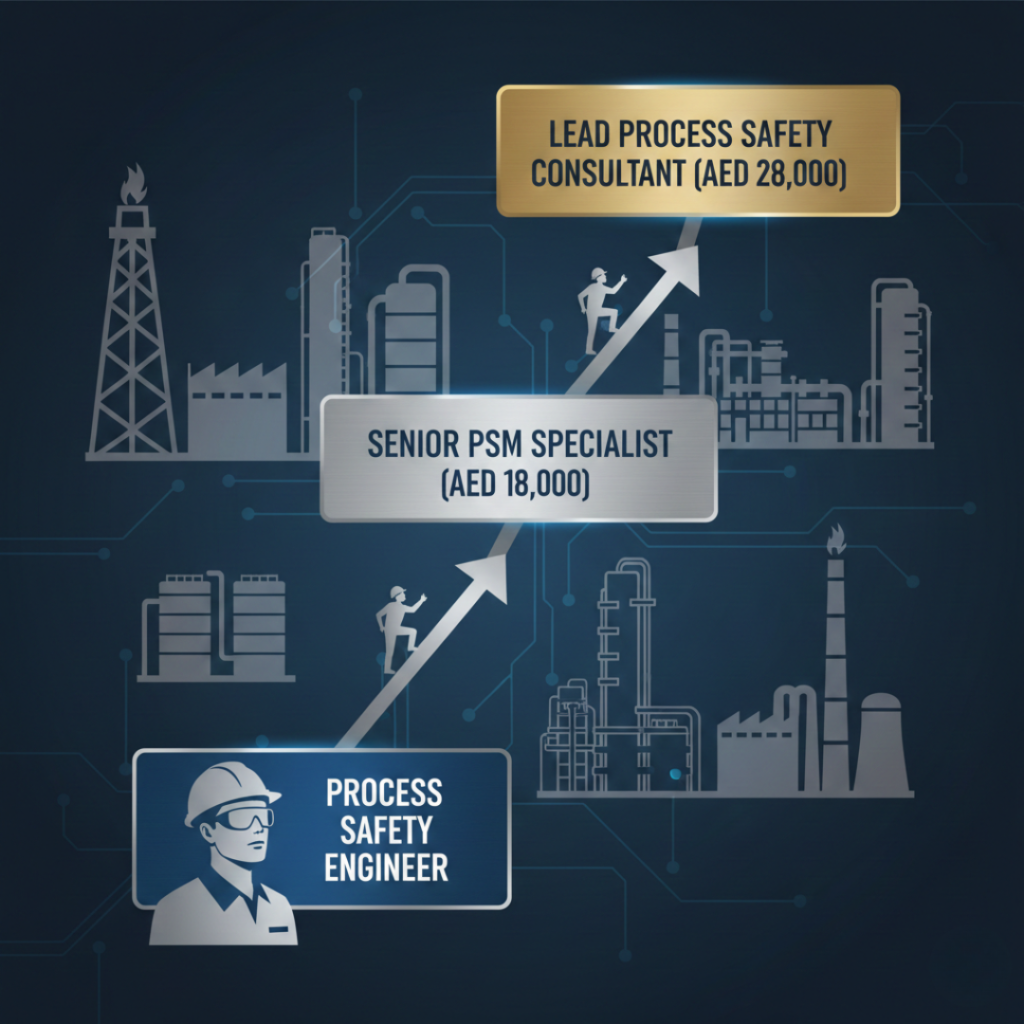
| Role | Without PSM | With PSM |
|---|---|---|
| Process Safety Engineer | AED 10,000-14,000 | AED 14,000-18,000 |
| PSM Coordinator | AED 12,000-16,000 | AED 16,000-22,000 |
| Senior PSM Specialist | AED 18,000-24,000 | AED 24,000-32,000 |
Key Industries Hiring:
- ADNOC and subsidiaries (Abu Dhabi)
- ENOC Group (Dubai)
- Borouge (Ruwais)
- Taweelah refineries
- Chemical manufacturing zones
- LNG facilities
FAQs
No. PSM is a standalone certificate. However, general HSE knowledge is beneficial.
Yes, especially by ADNOC group companies and major process facilities. OSHAD system in Abu Dhabi references process safety requirements.
IGC is broad general safety. PSM is specialized for major hazard process industries. PSM goes deep into process-specific risks that IGC doesn't cover.
Globally around 75-80%. At M2Y Safety, our pass rate exceeds 90% due to focused training.
Why Choose M2Y for NEBOSH PSM?
✅ Industry-Experienced Trainers: Our PSM instructors have 15+ years in process industries including oil refineries, petrochemical plants, and offshore facilities.
✅ Real Case Studies: Learn from actual incidents our trainers investigated, not just textbook examples.
✅ Practical Tools: Receive templates for HAZOP, LOPA, MOC that you can use immediately at work.
✅ Small Batches: Maximum 15 participants ensuring individual attention.
✅ Industry Connections: Network with other process safety professionals.