Crane Operator
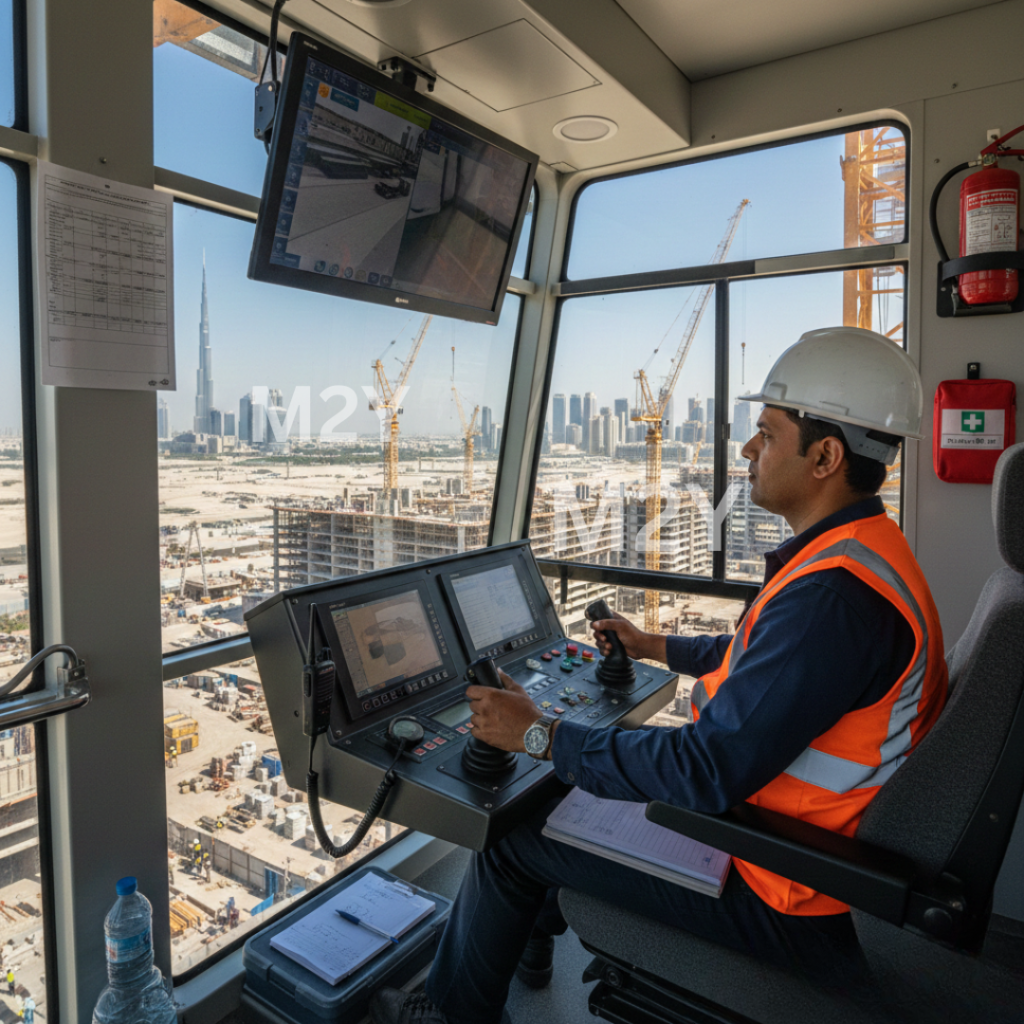
When Hassan arrived at the construction site for his first day as a certified tower crane operator, he looked up at the 60-meter crane towering above Dubai Marina and felt a mixture of pride and responsibility. Just six months earlier, he’d been a general construction worker earning AED 3,500 monthly. Today, with his crane operator certification from M2Y Safety Consultancy, he commands AED 8,500 per month—and that’s just the beginning of his career trajectory.
Hassan’s transformation isn’t unique. Across the UAE’s booming construction landscape, skilled crane operators are among the most sought-after and well-compensated tradespeople. With mega-projects continuously reshaping Dubai, Abu Dhabi, and other emirates, the demand for qualified crane operators has never been higher. Yet, many construction workers don’t realize how accessible this career path can be with proper training and certification.
Whether you’re considering a career as a crane operator, looking to advance from general construction work, or seeking to understand what this specialized role entails, this comprehensive guide covers everything you need to know about becoming a certified crane operator in the UAE—from training requirements and certification pathways to job opportunities and salary expectations.
What is a Crane Operator?
A crane operator is a highly skilled professional who operates cranes and lifting equipment to move, position, and place heavy materials and loads at construction sites, industrial facilities, ports, and other locations. This specialized role requires technical knowledge, spatial awareness, hand-eye coordination, and rigorous safety consciousness.
Crane operators work with various types of cranes including:
- Mobile cranes – truck-mounted, all-terrain, rough-terrain
- Tower cranes – fixed or climbing cranes for high-rise construction
- Overhead cranes – bridge cranes in factories and warehouses
- Crawler cranes – tracked cranes for heavy lifting
- Telescopic cranes – boom cranes with extending sections
The role goes far beyond simply operating controls. Professional crane operators must:
- Read and interpret lift plans provided by engineers
- Perform pre-operational inspections ensuring equipment safety
- Calculate load weights and center of gravity for safe lifting
- Coordinate with rigging crews and signalers for precise movements
- Understand weather conditions affecting operations (wind, visibility)
- Maintain detailed operational logs and documentation
- Respond to emergency situations with appropriate protocols
- Adhere to strict safety regulations protecting workers and property
The Importance of Crane Operators in UAE
The UAE’s construction sector, valued at over AED 600 billion, relies fundamentally on crane operators. From the world’s tallest buildings to expansive infrastructure projects, virtually every major development requires skilled crane operation.
Key UAE projects employing crane operators:
- High-rise residential and commercial towers throughout Dubai and Abu Dhabi
- Expo 2020 Dubai legacy projects and ongoing developments
- NEOM and cross-border mega-developments
- Port expansions (Dubai Ports, Abu Dhabi Ports)
- Oil and gas facility construction and maintenance
- Industrial manufacturing plant installations
- Metro and rail system expansions
This sustained construction activity creates consistent demand for qualified crane operators, making it one of the most stable and rewarding careers in the UAE construction industry.
Types of Crane Operators: Specializations and Roles
Different crane types require specialized skills, training, and often separate certifications.
Mobile Crane Operator
Equipment Types:
- Truck-mounted cranes (ranging from 20 to 1,200+ ton capacity)
- All-terrain cranes for diverse ground conditions
- Rough-terrain cranes for off-road construction sites
- Carry-deck cranes for confined industrial spaces
Typical Work Environments:
- Construction sites requiring equipment mobility
- Infrastructure projects (bridges, highways)
- Industrial plant installations
- Emergency response and recovery operations
Key Skills Required:
- Understanding of crane stability and ground conditions
- Route planning for crane transportation
- Setup procedures including outrigger positioning
- Load chart interpretation for various boom configurations
- Coordination with spotters and ground crews
Salary Range in UAE: AED 6,000 – 12,000 monthly (varies with experience and crane size)
Tower Crane Operator
Equipment Types:
- Hammerhead tower cranes
- Luffing jib tower cranes (for congested urban sites)
- Self-erecting tower cranes
- Climbing cranes for super-tall structures
Typical Work Environments:
- High-rise building construction
- Dense urban development projects
- Long-term construction sites requiring vertical reach
- Mega-projects with multiple tower crane coordination
Key Skills Required:
- Exceptional spatial awareness and depth perception
- Comfort working at significant heights
- Precise control in confined urban environments
- Understanding of structural loading on buildings
- Communication with multiple ground crews simultaneously
- Weather awareness (wind speed critical for tower cranes)
Unique Challenges:
- Access to operator cabin via climbing ladders (sometimes 60+ meters)
- Extended periods in cabin (limited break opportunities)
- Working in temperature extremes (summer heat, winter cold)
- Managing limited visibility and blind spots
Salary Range in UAE: AED 7,000 – 15,000 monthly (tower crane specialists command premium wages)
Overhead Crane Operator
Equipment Types:
- Bridge cranes (single or double girder)
- Gantry cranes
- Jib cranes
- Monorail cranes
Typical Work Environments:
- Manufacturing facilities
- Warehouses and distribution centers
- Steel mills and fabrication shops
- Shipyards and marine facilities
- Maintenance workshops
Key Skills Required:
- Precision positioning for manufacturing processes
- Understanding of indoor spatial limitations
- Coordination with production schedules
- Load handling in repetitive cycles
- Maintenance awareness for frequently-used equipment
Salary Range in UAE: AED 5,000 – 9,000 monthly (varies by facility and industry)
Crawler Crane Operator
Equipment Types:
- Lattice boom crawler cranes
- Telescopic crawler cranes
- Heavy-lift crawlers (100+ ton capacity)
Typical Work Environments:
- Heavy industrial construction
- Oil and gas facilities
- Wind farm installations
- Bridge construction
- Port and marine projects
Key Skills Required:
- Heavy-lift planning and execution
- Understanding of ground bearing capacity
- Rigging knowledge for complex lifts
- Multi-crane lift coordination
- Extended radius and height calculations
Salary Range in UAE: AED 8,000 – 18,000 monthly (specialized heavy-lift operators earn premium rates)
Crane Operator Course: Training and Certification Pathways
Becoming a certified crane operator requires comprehensive training covering theoretical knowledge, practical skills, and safety procedures.
Crane Operator Training Requirements
Entry Prerequisites:
- Minimum age: 21 years (18 for some overhead cranes)
- Valid UAE residence visa and Emirates ID
- Medical fitness certificate (vision, hearing, physical capability)
- Basic literacy and numeracy skills
- No history of substance abuse
- Clean criminal record (for certain facilities)
Recommended Background:
- Construction or industrial experience (helpful but not mandatory)
- Mechanical aptitude and technical interest
- Good hand-eye coordination
- Comfort working at heights (for tower cranes)
- Problem-solving abilities
Standard Crane Operator Course Structure
Theoretical Training (40-60 hours):
Module 1: Introduction to Crane Operations
- Types of cranes and their applications
- Crane components and terminology
- Basic physics of lifting (forces, moments, stability)
- Industry regulations and standards
Module 2: Safety and Regulations
- UAE crane operation regulations
- OSHA, ASME, and international standards
- Personal protective equipment (PPE)
- Hazard identification and risk assessment
- Emergency procedures and incident response
Module 3: Load Calculation and Planning
- Reading and interpreting load charts
- Calculating load weights and center of gravity
- Understanding load radius and crane capacity
- Weather considerations (wind speed limits)
- Lift planning and method statements
Module 4: Pre-Operational Procedures
- Daily inspection checklists
- Identifying equipment defects
- Testing safety systems
- Ground condition assessment
- Setup and stabilization procedures
Module 5: Operational Techniques
- Control familiarization and operation
- Load rigging principles
- Communication signals and protocols
- Precision positioning techniques
- Multiple-crane coordination
Module 6: Maintenance and Documentation
- Routine maintenance requirements
- Record-keeping and logbooks
- Reporting procedures
- Equipment lifespan and replacement
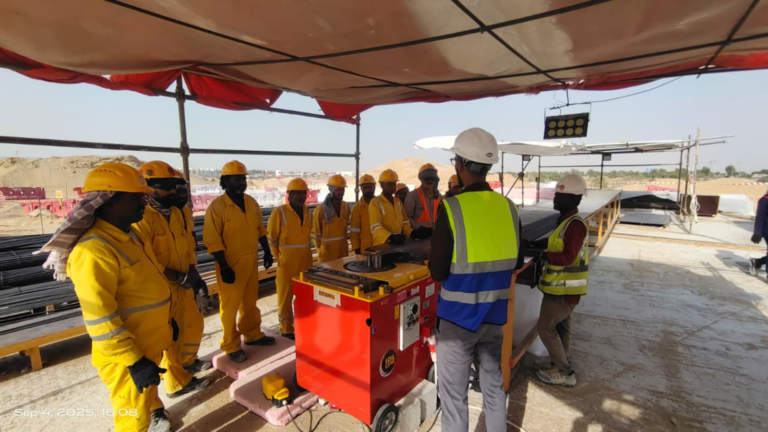
Practical Training (60-100 hours):
Hands-On Skills Development:
- Simulator training (if available) for basic control familiarization
- Supervised operation of actual crane equipment
- Progressive complexity: simple lifts to advanced maneuvers
- Various load types and configurations
- Emergency scenario practice
- Precision exercises (placing loads within tight tolerances)
Assessment Components:
- Written examination (theory)
- Practical skills test (demonstrating competence)
- Safety procedures evaluation
- Pre-operational inspection demonstration
Crane Operator Certification in UAE
Certifying Bodies:
- ADNOC Approved Crane Operator Certificate
- Required for oil and gas sector operations
- Recognized across Abu Dhabi and UAE
- Includes ADNOC-specific safety requirements
- Valid for 2 years (renewal required)
- Dubai Municipality Approved Certificate
- Required for construction sites in Dubai
- Specific to Dubai regulatory framework
- Recognized by major contractors
- International Certifications (NCCCO, CPCS, NPORS)
- Globally recognized credentials
- Valuable for international mobility
- Often preferred by multinational contractors
- May require UAE-specific supplementary training
- Manufacturer-Specific Certifications
- Liebherr, Manitowoc, Terex, etc.
- Often required for operating specific crane models
- Provided after completing manufacturer training
M2Y Safety Consultancy Crane Operator Training:
Course Options:
- Mobile Crane Operator Course (3-4 weeks)
- Tower Crane Operator Course (3-4 weeks)
- Overhead Crane Operator Course (2-3 weeks)
- Rigger and Signaler Training (1-2 weeks – often combined)
Training Features:
✓ ADNOC-approved programs
✓ Experienced instructors with decades of crane operation experience
✓ Actual equipment training (not just simulation)
✓ Small class sizes ensuring personalized instruction
✓ Job placement assistance with UAE employers
✓ Flexible scheduling including weekend options
✓ Certification exam preparation and support
Course Duration: Typically 3-4 weeks combining classroom theory with extensive practical training on actual crane equipment.
Investment:
- Mobile/Tower Crane Operator: AED 4,500 – 8,000 (varies by crane type and certification)
- Includes: Training, examination fees, certification, materials
Visit M2Y Safety Consultancy to view complete crane operator training schedules and enroll in upcoming courses.
Crane Operator Jobs in UAE: Opportunities and Market Demand
The UAE job market for crane operators remains consistently strong due to sustained construction and industrial activity.
Crane Operator Jobs in Dubai
Dubai’s construction landscape creates substantial demand for crane operators:
Major Employment Sectors:
- High-rise construction: Residential towers, commercial buildings, hotels
- Infrastructure projects: Roads, bridges, metro expansions
- Theme parks and entertainment: Dubai Parks, IMG Worlds, future projects
- Port operations: Jebel Ali Port, Dubai Maritime City
- Industrial zones: Dubai Industrial City, JAFZA
Top Employers Hiring Crane Operators in Dubai:
- Arabtec Construction
- Al Futtaim Carillion (ALEC)
- Shapoorji Pallonji
- Sobha Group
- Dubai Contracting Company
- China State Construction Engineering Corporation (Middle East)
- Al Habtoor Group
- Emaar Properties (through contractors)
- Dubai Ports World
Job Market Characteristics:
- Consistent openings across experience levels
- Preference for certified operators with UAE experience
- Many positions offer direct employment (not just contract)
- Accommodation often provided for positions outside city center
- Overtime opportunities common during peak project phases
Crane Operator Jobs in Abu Dhabi and UAE
Beyond Dubai, opportunities exist throughout the Emirates:
Abu Dhabi:
- Oil and gas facilities (ADNOC operations)
- Mega-projects (Yas Island developments, Saadiyat Island)
- Industrial construction
- Port and logistics operations
- Government infrastructure projects
Sharjah:
- Industrial zone expansions
- Residential construction
- Port operations
Other Emirates:
- Ras Al Khaimah: Industrial and port operations
- Fujairah: Port and logistics
- Ajman: Construction projects
- Umm Al Quwain: Emerging developments
Specialized Opportunities:
- Oil & Gas Sector: Onshore and offshore crane operations (premium compensation)
- Port Operations: Container handling cranes (steady employment)
- Manufacturing: Facility maintenance crane operators (regular hours)
- Rental Companies: Crane operators supplied to various projects
How to Find Crane Operator Jobs in UAE
Job Search Strategies:
- Online Job Portals:
- Bayt.com (largest Middle East job site)
- Indeed UAE
- LinkedIn (professional networking)
- GulfTalent
- Naukrigulf
- Direct Company Applications:
- Visit major construction company websites
- Submit applications to crane rental companies
- Contact recruitment divisions of major contractors
- Recruitment Agencies:
- Specialized construction recruitment firms
- Contract staffing agencies
- International recruitment consultancies
- Networking:
- Connect with training course peers
- Join construction industry groups (LinkedIn, Facebook)
- Attend industry events and job fairs
- Leverage instructor connections at M2Y Safety Consultancy
- Walk-in Applications:
- Visit active construction sites (approach site offices)
- Industrial zones often have multiple employers
- Crane rental company offices
Application Tips:
- Ensure your CV highlights certification and experience clearly
- Include specific crane types and capacities you’ve operated
- List projects or employers with recognizable names
- Attach copies of certifications and licenses
- Prepare original certificates for interviews
- Dress professionally for interviews (business casual minimum)
- Be prepared to demonstrate knowledge in technical interview
Crane Operator Salary in UAE: Compensation and Benefits
Crane operator salaries in the UAE vary significantly based on experience, crane type, certification level, and employer.
Salary Breakdown by Experience and Crane Type
| Experience Level | Mobile Crane | Tower Crane | Overhead Crane | Crawler Crane |
|---|---|---|---|---|
| Entry Level (0-2 years) | AED 4,500 – 6,500 | AED 5,000 – 7,000 | AED 4,000 – 6,000 | AED 5,500 – 7,500 |
| Mid-Level (3-5 years) | AED 6,500 – 9,000 | AED 7,000 – 10,000 | AED 6,000 – 8,000 | AED 7,500 – 11,000 |
| Senior Level (6-10 years) | AED 9,000 – 12,000 | AED 10,000 – 14,000 | AED 8,000 – 10,000 | AED 11,000 – 16,000 |
| Specialist (10+ years) | AED 12,000 – 18,000 | AED 14,000 – 20,000 | AED 10,000 – 13,000 | AED 16,000 – 25,000 |
Factors Affecting Salary:
- Crane Size and Complexity:
- Larger capacity cranes command higher rates
- Complex equipment (luffing tower cranes, heavy-lift crawlers) pay premium
- Certification Level:
- Multiple crane type certifications increase value
- International certifications (NCCCO, CPCS) add 10-20%
- ADNOC approval essential for oil & gas sector premium
- Project Type:
- Oil & gas projects: Highest compensation (20-40% above construction)
- High-rise luxury projects: Above-average rates
- Standard residential construction: Market average
- Industrial maintenance: Stable but often lower rates
- Employment Model:
- Direct hire: Standard salaries with full benefits
- Contract positions: 15-30% higher daily/monthly rates but fewer benefits
- Crane rental company: Moderate salary but steady employment
- Working Hours:
- Standard 48-hour weeks: Base salary
- Extended hours/overtime: Significant additional earnings (1.5x to 2x hourly rate)
- Night shifts: Shift allowance (AED 500-1,500/month)
Total Compensation Package
Beyond basic salary, crane operators typically receive:
Standard Benefits:
- Accommodation: Company-provided housing or allowance (AED 1,500-3,000/month)
- Transportation: Company transport or allowance (AED 500-1,000/month)
- Medical insurance: Comprehensive coverage (as per UAE labor law minimum)
- Annual leave: 30 days per year standard
- Air tickets: Annual return ticket to home country
- End-of-service gratuity: 21 days salary per year (first 5 years), 30 days thereafter
Additional Compensation:
- Overtime pay: Common during peak project phases
- Project completion bonuses: AED 2,000-10,000 depending on project and role
- Performance incentives: Some employers offer quarterly/annual bonuses
- Shift allowances: For night or challenging shift patterns
- Safety bonuses: Incident-free operation rewards
Premium Benefits (Major Employers):
- Family status: Sponsorship for wife and children
- Education allowance: For children’s schooling
- Annual bonus: 1-2 months’ salary for excellent performance
- Career development: Paid training for additional certifications
- Housing upgrade: Better accommodation for senior operators
Salary Comparison: UAE vs. Other Markets
How UAE Crane Operator Salaries Compare Globally:
| Location | Average Monthly Salary (USD equivalent) | Tax/Take-home |
|---|---|---|
| UAE | $2,000 – $5,500 | Tax-free (100% take-home) |
| Saudi Arabia | $1,800 – $4,500 | Tax-free |
| Qatar | $2,200 – $5,000 | Tax-free |
| USA | $4,000 – $7,000 | ~70% after tax |
| UK | $3,500 – $6,000 | ~65% after tax |
| Australia | $5,000 – $8,000 | ~68% after tax |
| Canada | $4,500 – $7,500 | ~67% after tax |
UAE Advantages:
- Tax-free income: Significantly higher take-home pay
- Lower cost of living: (compared to Western countries)
- Savings potential: Many operators save 50-70% of income
- Career mobility: International experience valuable globally
- Quality of life: Modern infrastructure, safety, stability
Daily Life of a Crane Operator: What to Expect
Understanding the day-to-day reality helps set appropriate expectations.
Typical Workday Schedule
6:00 AM – Arrival and Preparation
- Arrive at site (often via company transport)
- Sign in and receive daily briefing
- Review lift plan for the day
- Check weather conditions (especially wind speed)
6:30 AM – Pre-Operational Inspection
- Conduct comprehensive equipment inspection
- Test all controls and safety systems
- Check hydraulic levels, fuel, basic maintenance
- Document inspection findings in logbook
- Report any defects to supervisor
7:00 AM – Begin Operations
- Communicate with ground crew and signaler
- Execute lifts according to approved lift plan
- Maintain constant awareness of surroundings
- Coordinate with other crane operators (if multiple cranes on site)
10:00 AM – Morning Break
- Short break (typically 15-30 minutes)
- Remain near crane (cannot leave site)
10:30 AM – Resume Operations
- Continue lift operations
- Adapt to any changes in lift plan
- Monitor weather conditions continuously
1:00 PM – Lunch Break
- One-hour break (typical)
- Rest in crew facilities or mess hall
2:00 PM – Afternoon Operations
- Resume lifting operations
- Often the hottest part of day (summer challenge)
- Maintain concentration and precision
3:30 PM – Afternoon Break
- Short break (15-20 minutes)
4:00 PM – Final Operations
- Complete scheduled lifts for the day
- Secure crane and lifting equipment
- Return crane to safe overnight position
5:00 PM – End-of-Day Procedures
- Complete logbook entries
- Report any issues or near-misses
- Participate in toolbox talk if scheduled
- Depart site
Total Working Hours: Typically 9-10 hours (including breaks)
Physical and Mental Demands
Physical Challenges:
- Long periods seated: 8+ hours in operator cabin
- Confined spaces: Limited room in operator cabins
- Climbing: Tower crane operators climb 30-80 meters daily
- Temperature extremes: Cabin heat in summer (can exceed 45°C), cold in winter
- Vibration exposure: Continuous throughout operation
- Limited restroom access: Especially tower crane operators
Mental Demands:
- Constant vigilance: Lives and property depend on operator attention
- Spatial awareness: Judging distances and clearances accurately
- Multi-tasking: Operating controls while monitoring surroundings and communicating
- Stress management: High-value loads and tight schedules create pressure
- Problem-solving: Adapting to unexpected situations
- Patience: Waiting for rigging preparation, weather clearance, coordination
Coping Strategies:
- Proper hydration (essential in UAE climate)
- Regular exercise maintaining physical fitness
- Adequate sleep (shift work can be disruptive)
- Stress management techniques
- Strong communication with ground crews
Career Satisfaction Factors
What Crane Operators Enjoy:
- Skill mastery: Pride in developing precision and expertise
- Tangible results: Seeing buildings rise from your work
- Respect: Recognized skill commands professional respect
- Independence: Significant autonomy in operator cabin
- Job security: Consistent demand for qualified operators
- Compensation: Above-average earning potential
- Career progression: Clear advancement pathways
Common Challenges:
- Weather dependency: Work stopped during high winds, poor visibility
- Pressure: Responsibility for expensive equipment and worker safety
- Monotony: Repetitive tasks on some projects
- Physical strain: Long hours seated, temperature extremes
- Limited social interaction: Much of day spent alone in cabin
- Shift work: Some positions require night or rotating shifts
Career Advancement: Growing Beyond Basic Operation
Crane operation offers clear career progression pathways.
Advancement Opportunities
Level 1: Trainee/Assistant Operator
- Learning under supervision
- Assisting with equipment setup
- Performing basic lifts
- Duration: 6-12 months
- Salary: AED 4,000-5,500
Level 2: Certified Operator
- Independent operation of standard cranes
- Routine lifts and operations
- Duration: 2-4 years
- Salary: AED 6,000-9,000
Level 3: Senior Operator
- Complex lifts and challenging conditions
- Multiple crane certifications
- Mentoring junior operators
- Duration: 4-8 years
- Salary: AED 9,000-14,000
Level 4: Specialist Operator
- Heavy-lift operations
- Complex multi-crane lifts
- High-value or high-risk operations
- Duration: 8+ years
- Salary: AED 14,000-25,000
Level 5: Crane Supervisor/Coordinator
- Managing multiple crane operations
- Lift planning and coordination
- Team supervision
- Duration: 10+ years
- Salary: AED 18,000-30,000
Level 6: Lifting Operations Manager
- Overseeing entire lifting departments
- Fleet management
- Project planning
- Duration: 15+ years
- Salary: AED 25,000-45,000
Additional Certifications Enhancing Career
Complementary Qualifications:
- Rigger and Slinger Certification: Understanding rigging enhances operator effectiveness
- Lifting Supervisor Certificate: Progression to supervisory roles
- IOSH Managing Safely: Safety management competence
- Appointed Person (Lifting): LEEA qualification for lift planning
- Additional Crane Types: Multi-crane certification increases marketability
- Instructor Certification: Teaching next generation of operators
M2Y Safety Consultancy offers all these complementary training programs, providing comprehensive career development support.
Frequently Asked Questions (FAQs)
Becoming a certified crane operator in the UAE typically takes 3-4 weeks for the initial training course, which includes both theoretical classroom instruction and hands-on practical training with actual equipment. The training covers safety procedures, load calculations, operational techniques, and pre-operational inspections. After completing the course, you must pass both written and practical examinations to receive your certification. However, the total journey from complete beginner to employable operator realistically takes 2-3 months when you factor in obtaining necessary prerequisites (medical fitness certificate, Emirates ID), completing the training, passing examinations, and securing your first position. Some employers hire operators immediately after certification but place them in assistant roles for 3-6 months under supervision before independent operation. M2Y Safety Consultancy provides accelerated training pathways and job placement assistance to help graduates enter the workforce quickly.
Crane operator salaries in the UAE vary significantly based on experience, crane type, and certification level. Entry-level crane operators (0-2 years experience) typically earn AED 4,500-7,000 monthly, while mid-level operators (3-5 years) earn AED 6,500-10,000. Senior crane operators (6-10 years) command AED 9,000-14,000, and specialist operators with 10+ years experience can earn AED 14,000-25,000 or more. Tower crane operators generally earn 10-20% more than mobile crane operators due to the specialized skills required. Beyond base salary, most positions include accommodation (company-provided or AED 1,500-3,000 allowance), transportation, medical insurance, annual leave, and return air tickets. The UAE's tax-free income means 100% of your salary is take-home pay, significantly higher than equivalent positions in Western countries where 30-40% goes to taxes. Oil and gas sector crane operators earn premium rates, often 20-40% above standard construction sector salaries.
To become a crane operator in the UAE, you must meet several requirements: (1) Be at least 21 years old (18 for some overhead crane positions); (2) Hold valid UAE residence visa and Emirates ID; (3) Obtain a medical fitness certificate demonstrating adequate vision, hearing, and physical capability from an approved medical center; (4) Complete an approved crane operator training course (3-4 weeks) from a recognized training provider like M2Y Safety Consultancy; (5) Pass both written and practical certification examinations; (6) Obtain relevant certification (ADNOC-approved for oil & gas, Dubai Municipality-approved for Dubai construction sites, or international certifications like NCCCO/CPCS); (7) Have basic literacy and numeracy skills to read load charts and maintain logbooks. While previous construction or mechanical experience is helpful, it's not mandatory—motivated individuals with no prior experience can successfully complete training. A clean criminal record is required for certain facilities, and you must have no history of substance abuse. The entire process from starting training to receiving certification typically takes 4-8 weeks.
Mobile crane operators and tower crane operators work with fundamentally different equipment requiring distinct skill sets. Mobile crane operators work with truck-mounted or crawler cranes that can be moved between locations, typically on construction sites, infrastructure projects, or industrial installations. They must understand ground conditions, crane stability, outrigger positioning, and route planning for crane transportation. Mobile crane work involves frequent setup and breakdown, working at ground level, and often completing multiple jobs per day at different locations. Tower crane operators work with fixed cranes installed on construction sites for extended periods (months or years), primarily for high-rise building construction. They work from operator cabins positioned 30-100+ meters above ground, accessed via climbing ladders daily. Tower crane operation requires exceptional spatial awareness, comfort with heights, precision in confined urban environments, and ability to work extended periods in the cabin with limited break opportunities. Tower crane operators generally earn 10-20% more than mobile crane operators due to the specialized nature and working conditions. Both require separate certifications, though experienced operators often obtain qualifications for multiple crane types to increase employability. M2Y Safety Consultancy offers specialized training for both mobile and tower crane operations.
Yes, crane operator job opportunities in the UAE remain consistently strong due to sustained construction and industrial activity. The UAE construction sector, valued at over AED 600 billion, relies fundamentally on crane operators for virtually every major development project. Dubai alone has hundreds of active construction sites requiring crane operations, while Abu Dhabi's oil and gas sector, industrial projects, and mega-developments create additional demand. Job opportunities exist across multiple sectors: high-rise building construction (residential and commercial towers), infrastructure projects (roads, bridges, metro expansions), port operations (container handling), oil and gas facilities, manufacturing plants, and industrial maintenance. Major employers actively hiring include Arabtec, ALEC, Shapoorji Pallonji, ADNOC contractors, Dubai Ports World, and numerous international construction firms. The market particularly favors certified operators with UAE experience, though entry-level positions exist for newly certified operators. Many positions offer direct employment (not just contract work) with comprehensive benefits including accommodation, transportation, medical insurance, and annual leave. The profession offers excellent job security—construction activity remains robust, and skilled crane operators are always in demand. M2Y Safety Consultancy provides job placement assistance, connecting graduates with UAE employers actively seeking certified crane operators, significantly improving employment prospects for newly qualified operators.