Scaffolding Inspector Training
Why Scaffolding Inspector Training Could Launch Your High-Paying UAE Career
Walk past any construction site in Dubai—whether it’s the towering developments in Business Bay or the sprawling projects across the Emirates—and you’ll see one thing everywhere: scaffolding. Miles of it. Supporting workers dozens of stories above ground.
Now ask yourself: Who ensures that metal framework won’t collapse?
Scaffolding inspectors. They’re the safety gatekeepers who stand between productive construction and catastrophic failure. And right now, the UAE construction industry desperately needs qualified inspectors.
The reality is stark: The UAE’s construction sector is projected to reach $167 billion by 2025. Every high-rise, every infrastructure project, every renovation requires certified scaffolding inspectors. The demand is staggering. The pay is excellent. But you need proper certification.
Whether you’re a construction professional seeking specialization, a safety officer expanding credentials, or someone exploring stable, well-paid careers in the UAE’s booming construction sector, scaffolding inspector training is your strategic gateway.

What Is Scaffolding Inspector Training?
Scaffolding inspector training equips professionals with technical knowledge and practical skills to assess scaffolding structures for safety, compliance, and structural integrity before workers use them.
Think of it as quality control for construction safety. Before anyone steps onto scaffolding, an inspector must verify it meets stringent safety standards.
What You’ll Learn
A qualified scaffolding inspector evaluates:
- Structural stability and load-bearing capacity
- Foundation adequacy and base plate positioning
- Tie configurations and anchor points
- Guard rails, toe boards, and fall protection systems
- Ladder access and platform spacing
- Compliance with UAE regulations and international standards
- Weather-related risks and environmental factors
Training duration: Typically 1-2 days for awareness level
Investment: AED 150 – AED 200
Certification validity: 3 years
Why UAE Needs Scaffolding Inspectors
The United Arab Emirates presents unique challenges that make scaffolding inspector training particularly crucial:
Construction boom: Dubai and Abu Dhabi are construction powerhouses with thousands working in high-risk environments daily.
Regulatory requirements: The UAE Ministry of Human Resources and Emiratisation mandates that businesses maintain adequate scaffolding inspection protocols.
Extreme weather: UAE summers routinely exceed 45°C (113°F), affecting material properties and structural integrity.
Legal compliance: According to Federal Law No. 8 of 1980 (UAE Labor Law) and Dubai Municipality regulations, proper scaffolding inspection is mandatory.
Key Scaffolding Inspector Responsibilities
Understanding what scaffolding inspectors actually do helps clarify if this career suits you.
Daily Visual Inspections
Before each work shift, inspectors conduct checks of:
- Structural integrity—no visible damage or missing components
- Access points—ladders secure, platforms properly boarded
- Weather impacts—wind damage, water accumulation
- Work zone safety—proper signage, restricted access
Time required: 15-30 minutes per structure
Weekly Detailed Assessments
More comprehensive evaluations occur weekly or after events affecting integrity:
- Load verification—ensuring no overloading
- Component wear assessment—checking corrosion, cracks
- Tie point inspection—verifying anchor security
- Foundation stability—checking for settlement or erosion
Time required: 1-2 hours depending on complexity
Documentation and Reporting
Inspectors spend significant time on:
- Completing standardized inspection forms
- Uploading photographic evidence
- Issuing safety status tags (red/amber/green)
- Writing incident reports when defects are found
- Maintaining logs for regulatory compliance
Critical importance: Records must be maintained for minimum 5 years per UAE regulations.
Scaffolding Inspector Jobs in UAE: Career Opportunities
Let’s talk about career prospects—because that’s ultimately why most people pursue this certification.
Current Job Market
The UAE construction sector employs over 1.2 million workers. Job search platforms show consistent demand:
- Indeed UAE: 100+ scaffolding inspector positions
- Bayt.com: 150+ active listings across Emirates
- LinkedIn: 200+ UAE-based scaffolding inspector jobs
Salary Expectations in UAE
Entry-Level Inspector (0-2 years):
- Monthly salary: AED 4,000 – AED 6,000
- Annual package: AED 48,000 – AED 72,000
Mid-Level Inspector (2-5 years):
- Monthly salary: AED 6,000 – AED 9,000
- Annual package: AED 72,000 – AED 108,000
Senior Inspector/Lead (5+ years):
- Monthly salary: AED 9,000 – AED 15,000
- Annual package: AED 108,000 – AED 180,000
Benefits typically include: Housing allowance, transportation, medical insurance, annual flights

Types of Employers Hiring
Construction Companies:
- Major general contractors (Arabtec, Drake & Scull)
- Specialized scaffolding contractors
- Facilities management firms
Third-Party Inspection Firms:
- Safety consultancies like M2Y Safety Consultancy
- Engineering consultancies
- Insurance inspection companies
Government & Infrastructure Projects:
- Dubai Municipality projects
- Abu Dhabi government developments
- Federal infrastructure initiatives
Industrial Facilities:
- Oil and gas sector (ADNOC facilities)
- Power plants and manufacturing
- Petrochemical operations
Scaffolding Inspector Training in Dubai: What to Expect
Course Structure
M2Y Safety Consultancy offers comprehensive scaffolding inspector awareness training:
Day 1: Theory and Practical (6-8 hours)
- Scaffolding types and components
- UAE regulatory requirements
- Inspection methodology and checklists
- Hazard identification techniques
- Hands-on equipment inspection
- Documentation standards
Assessment:
- Written examination (multiple choice)
- Practical inspection demonstration
- Certificate upon successful completion
Training Delivery Options
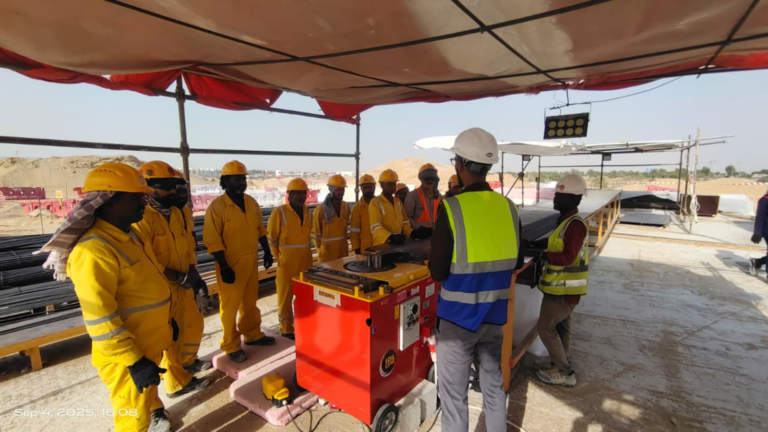
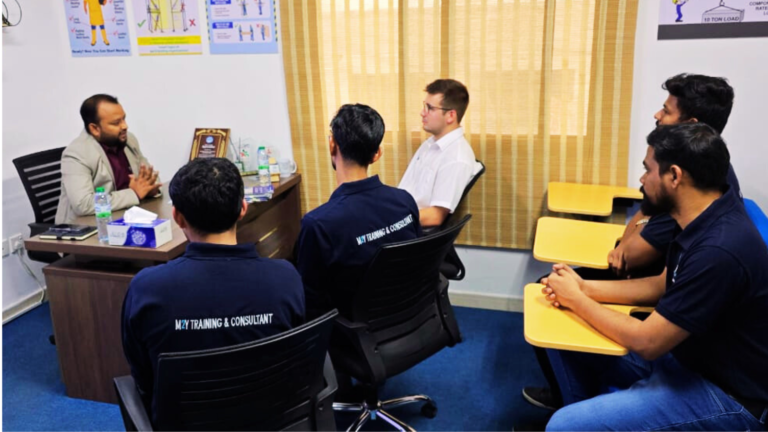
Classroom Training:
- Interactive sessions with experienced instructors
- Visual aids and case studies
- Networking with other professionals
On-Site Corporate Training:
- Conducted at your workplace
- Customized to your specific scaffolding types
- Convenient for training multiple staff members
- Group discounts available (10+ participants)
Practical Components:
- Hands-on inspection practice
- Real scaffolding structure evaluation
- Defect identification exercises
- Report writing practice
Legal Requirements for Scaffolding Inspection in UAE
Understanding the regulatory landscape is crucial.
Federal UAE Regulations
UAE Cabinet Resolution No. 37 of 2018 (Occupational Health and Safety System) mandates:
- All scaffolding must be inspected before initial use
- Regular inspections at intervals not exceeding 7 days
- Qualified competent persons must conduct inspections
- Inspection records must be maintained
Dubai Municipality Requirements
- Scaffolding requires approved design drawings
- Color-coded tagging system mandatory
- Digital inspection records increasingly required
- Fines for non-compliance: AED 10,000 – AED 100,000
Abu Dhabi OSHAD Standards
The Occupational Safety and Health Administration Dubai (OSHAD) requires:
- OSHAD-approved inspector certification
- Integration with safety management systems
- Specific inspection frequency based on risk
- Enhanced documentation for high-risk projects
Scaffolding Inspector Training Comparison
| Feature | Basic Awareness | Advanced Certification |
|---|---|---|
| Duration | 1-2 days | 3-5 days |
| Investment | AED 150-200 | AED 2,000-3,500 |
| Prerequisites | None | 2+ years experience |
| Certification | Awareness Certificate | Professional Inspector Card |
| Validity | 3 years | 3-5 years |
| Ideal For | Site supervisors, safety officers | Professional inspectors, managers |
| Job Roles | Assistant inspector, safety coordinator | Lead inspector, safety consultant |
How to Become a Certified Scaffolding Inspector
Step 1: Check Eligibility
Minimum requirements:
- 18+ years of age
- Basic English proficiency
- Physical ability for site inspections
- High school education or equivalent
Advantageous background:
- Construction experience
- Safety officer training
- Technical education
Step 2: Choose Training Provider
Look for:
- Recognized certifications
- Experienced instructors from the field
- Practical training components
- UAE regulatory compliance
- Post-training support
M2Y Safety Consultancy offers:
- Internationally recognized certification
- Bilingual instruction (English/Arabic)
- Lifetime access to updated materials
- Job placement assistance
- Small class sizes (maximum 12 students)
Step 3: Complete Training
Attend the full course duration and participate actively in:
- Theory sessions
- Practical exercises
- Site inspections (if included)
- Documentation practice
Step 4: Pass Assessment
Written exam covers:
- Component identification
- Regulatory knowledge
- Inspection procedures
- Hazard recognition
Practical assessment evaluates:
- Systematic inspection approach
- Defect identification
- Proper documentation
- Safety decision-making
Passing score: Typically 70-80%
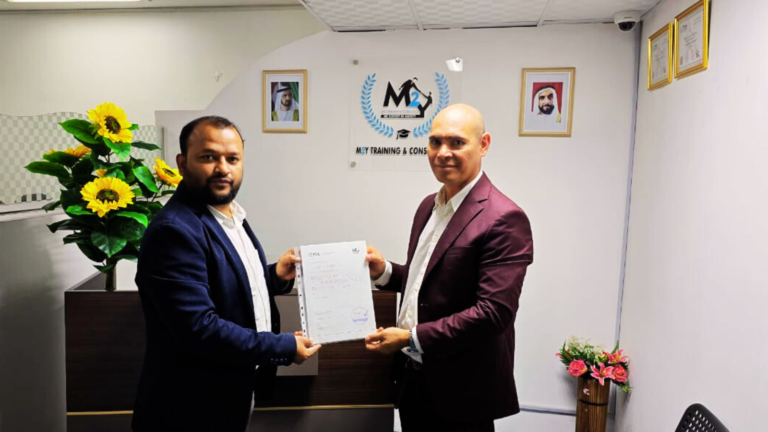
Step 5: Receive Certification
Upon successful completion:
- Official certificate
- Digital certification record
- Inspector identification card
- Access to continued education resources
Step 6: Maintain Your Credentials
- Attend refresher training every 3 years
- Stay updated on regulation changes
- Document inspection experience
- Participate in professional development
Why Choose M2Y Safety Consultancy for Scaffolding Inspector Training
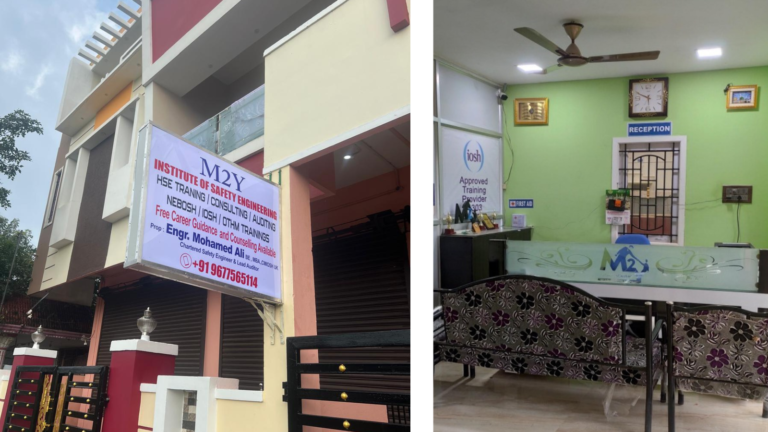
M2Y Safety Consultancy has delivered scaffolding training across the UAE, certifying hundreds of inspectors now working on Dubai’s most prominent projects.
What Sets M2Y Apart
Experienced Instructors: Our trainers are active inspectors, former project managers, and safety consultants with real UAE project experience.
Practical Focus: We emphasize hands-on learning with actual scaffolding structures, not just theory and PowerPoints.
Regulatory Expertise: Our curriculum covers UAE-specific requirements alongside international standards.
Flexible Scheduling: Weekend courses, corporate training, and customized programs to fit your schedule.
Career Support: We maintain relationships with major UAE contractors and refer qualified graduates for positions.
Affordable Investment: Quality training at AED 150-200 makes safety certification accessible to everyone.
Lifetime Resources: Graduates receive ongoing access to updated materials and refresher content.
Frequently Asked Questions
Basic awareness training takes 1-2 days (6-8 hours per day). The entire process from enrollment to certification typically spans one week. Advanced professional certification courses take 3-5 days. M2Y Safety Consultancy offers flexible scheduling including weekend courses to accommodate working professionals.
Scaffolding inspectors conduct daily visual checks, weekly detailed inspections, and post-modification assessments. They verify structural integrity, check load capacities, ensure guard rails and access points are secure, document findings, issue safety tags, and coordinate with contractors on defect remediation. Inspectors must maintain detailed records for regulatory compliance.
Not for basic awareness training. M2Y Safety Consultancy's entry-level courses are designed for beginners. However, having construction or safety experience helps you understand concepts faster and makes you more employable. Advanced certifications and many inspector positions do require 2+ years of relevant construction experience.
Entry-level inspectors earn AED 4,000-6,000 monthly (AED 48,000-72,000 annually). With 2-5 years experience, salaries increase to AED 6,000-9,000 monthly. Senior inspectors with 5+ years command AED 9,000-15,000 monthly (AED 108,000-180,000 annually). Salaries include benefits like housing allowance, transportation, and medical insurance.
Yes, if obtained from accredited providers. M2Y Safety Consultancy's certifications meet international standards and are recognized across GCC countries (Saudi Arabia, Qatar, Oman, Kuwait, Bahrain). For maximum international mobility, ensure your training provider offers globally recognized certification aligned with British Standards (BS 1139) or OSHA guidelines.
Most certifications require renewal every 3 years. Renewal involves completing a refresher course (typically 1 day) and passing an updated assessment. Some certifications also require documented proof of continuing professional development or minimum inspection hours. M2Y Safety Consultancy offers convenient refresher courses to help you maintain valid credentials.
Start Your Scaffolding Inspector Career Today
The UAE construction industry needs qualified scaffolding inspectors right now. This career offers:
✅ Competitive salaries starting from AED 48,000+ annually
✅ Job security in an evergreen industry
✅ Career growth into safety management
✅ International opportunities across GCC
✅ Professional satisfaction protecting lives
But quality training makes all the difference. Proper certification from experienced providers like M2Y Safety Consultancy produces confident, competent inspectors who build successful careers.
Your Next Steps
- Visit M2Y Safety Consultancy to review course schedules
- Contact our training team to discuss your career goals
- Enroll in scaffolding inspector training (classes fill quickly)
- Complete certification with hands-on practice
- Launch your new career with confidence
Don’t wait for the perfect moment. Scaffolding inspectors are working today, earning competitive salaries, and building meaningful careers in UAE construction.
The opportunities are there. The training is affordable. The only question is: Will you take the first step?