ISO 9001 Lead Auditor Course

Are you looking to advance your career in quality management? Perhaps you’ve been tasked with implementing ISO 9001 in your organization, or maybe you’re simply frustrated with inconsistent audit results. You’re not alone. Many quality professionals struggle to find the right training that combines theoretical knowledge with practical, real-world application.
The ISO 9001 Lead Auditor Course isn’t just another certification—it’s your ticket to becoming a trusted authority in quality management systems. Whether you’re in Dubai, Abu Dhabi, or anywhere in the UAE, this comprehensive guide will walk you through everything you need to know about becoming a certified lead auditor.
What Is an ISO 9001 Lead Auditor Course?
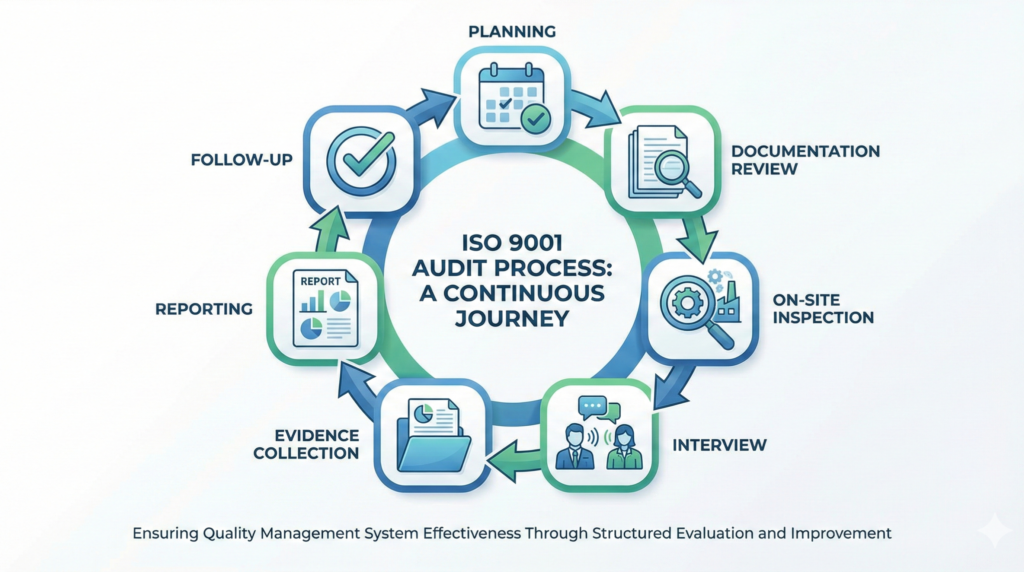
An ISO 9001 Lead Auditor Course is a specialized training program designed to equip professionals with the skills and knowledge to plan, conduct, report, and follow up on quality management system audits. This isn’t your typical classroom learning—it’s an intensive, hands-on experience that transforms you from a quality enthusiast into a competent auditor.
Why Does This Certification Matter?
Think of it this way: Anyone can read the ISO 9001 standard, but not everyone can effectively audit against it. The lead auditor course bridges that critical gap. You’ll learn to:
- Interpret ISO 9001:2015 requirements with confidence
- Plan and execute internal and external audits systematically
- Identify non-conformities and opportunities for improvement
- Lead audit teams with authority and professionalism
- Write clear, actionable audit reports that drive change
Real-world impact: Organizations with certified lead auditors see 40% faster ISO 9001 certification processes and significantly fewer non-conformities during external audits.
Understanding the ISO 9001:2015 Standard
Before diving into the course details, let’s clarify what you’re auditing against. ISO 9001:2015 is the internationally recognized standard for quality management systems (QMS). It’s built on seven key principles:
- Customer focus
- Leadership
- Engagement of people
- Process approach
- Improvement
- Evidence-based decision making
- Relationship management
The 2015 version introduced significant changes, including:
- Risk-based thinking
- Greater leadership involvement
- More flexible documentation requirements
- Enhanced focus on organizational context
Your lead auditor training will show you how to audit these elements effectively in any industry—manufacturing, healthcare, IT services, construction, or hospitality.
Who Should Take the QMS Lead Auditor Course?
This course isn’t limited to quality managers. It’s designed for:
Ideal Candidates:
- Quality managers and coordinators
- Internal auditors seeking advancement
- Compliance officers
- Management representatives
- Consultants working with multiple organizations
- Engineers transitioning into quality roles
- Anyone preparing for a career in auditing
Prerequisites: Most training providers require participants to have basic knowledge of ISO 9001 or attend a foundation course first. Some organizations accept relevant work experience in lieu of formal prerequisites.
ISO 9001 Lead Auditor Course Content: What You'll Actually Learn
Module 1: Understanding ISO 9001:2015 Requirements
You’ll dissect every clause of the standard, from Clause 4 (Context of the Organization) to Clause 10 (Improvement). But here’s the difference: you won’t just memorize requirements—you’ll see them applied in real organizational scenarios.
Module 2: Audit Principles and ISO 19011 Guidelines
ISO 19011 is your auditing bible. This module covers:
- The seven principles of auditing (integrity, fair presentation, due professional care, etc.)
- Audit planning and preparation techniques
- Risk assessment in audit contexts
- Competency requirements for auditors
Module 3: Planning and Conducting Audits
This is where theory meets practice. Through role-playing exercises and case studies, you’ll:
- Develop comprehensive audit plans
- Create effective checklists (without becoming checklist-dependent)
- Conduct opening meetings that set the right tone
- Interview techniques that reveal real issues
- Observation skills that spot non-conformities others miss
Module 4: Audit Reporting and Follow-up
Writing audit reports is an art. You’ll learn to:
- Document findings clearly and objectively
- Classify non-conformities correctly (major vs. minor)
- Write recommendations that organizations actually implement
- Conduct effective closing meetings
- Follow up on corrective actions
Module 5: Managing Audit Programs
For those aspiring to manage entire audit functions:
- Setting up annual audit schedules
- Resource allocation and auditor competency management
- Managing multi-site audits
- Handling difficult audit situations
ISO 9001 Lead Auditor Course Fees in UAE: What to Expect
Let’s talk numbers. ISO 9001 lead auditor course fees vary based on several factors:
Typical Fee Structure in UAE:
| Training Provider Type | Course Fee Range (AED) | Course Fee Range (USD) |
|---|---|---|
| International Certification Bodies | 5,000 – 8,000 | 1,360 – 2,180 |
| Local Training Centers | 3,500 – 6,000 | 950 – 1,635 |
| Online Self-Paced Programs | 2,000 – 4,000 | 545 – 1,090 |
| Corporate Group Training | 15,000 – 25,000 (for groups of 8-12) | 4,085 – 6,810 |
What’s Included in the Fee?
- Course materials and participant handbook
- Examination fees
- Certificate upon successful completion
- Access to online resources (varies by provider)
- Refreshments and lunch (for in-person courses)
Pro Tip: Some employers cover 100% of training costs for employees. Always check with your HR department before self-funding.
Course Duration and Format Options
Traditional Classroom Training
Duration: 5 days (40 hours) Schedule: Typically runs Monday to Friday, 8:00 AM – 5:00 PM Best for: Those who thrive in interactive environments and value networking
Virtual Live Training
Duration: 5 days with shorter daily sessions (6 hours/day) Schedule: Often spread over 2 weeks Best for: Professionals balancing work commitments or remote workers
Blended Learning
Duration: 3-4 days in-person + pre-course e-learning Best for: Busy professionals wanting flexibility with hands-on practice
Self-Paced Online
Duration: Access for 3-6 months Best for: Self-motivated learners with irregular schedules
Certification Process: Your Path to Becoming Certified
Choosing the Right Training Provider in UAE
Not all courses are created equal. Here’s how to select wisely:
Accreditation Matters
Look for courses accredited by:
- IRCA (International Register of Certificated Auditors) – The gold standard globally
- CQI (Chartered Quality Institute) – Highly respected, UK-based
- Exemplar Global – Strong in North America and Asia-Pacific
- PECB – Growing recognition internationally
Key Questions to Ask:
- What’s the trainer’s actual auditing experience? (Look for 100+ audits minimum)
- What industries do case studies cover?
- How much practical exercise time is included?
- What’s the pass rate for examinations?
- Do they offer post-course support?
Top Training Providers in UAE:
While we can’t endorse specific competitors, M2Y Safety Consultancy offers industry-focused lead auditor training with trainers who’ve conducted audits across manufacturing, oil & gas, construction, and service industries throughout the Middle East.
Career Benefits: Why This Investment Pays Off
Immediate Advantages:
Salary Impact: Certified lead auditors in UAE earn 25-40% more than non-certified quality professionals. Entry-level positions start at AED 8,000-12,000/month, while experienced lead auditors command AED 15,000-25,000/month or more.
Job Security: ISO 9001 remains the world’s most implemented management system standard with over 1 million certified organizations globally. Qualified auditors are always in demand.
Long-term Career Paths:
- Internal Route: Quality Manager → Head of Quality → Quality Director
- External Route: Lead Auditor → Audit Team Leader → Certification Body Manager
- Consulting Route: Independent consultant serving multiple clients
- Specialized Route: Industry-specific auditor (automotive, aerospace, medical devices)
Real-World Application: A Day in the Life of a Lead Auditor
Let me paint you a picture from an actual audit scenario:
7:30 AM – Preparation You arrive at a manufacturing facility in Dubai Industrial Park. You’ve already reviewed their QMS documentation, identified high-risk areas, and prepared your audit plan.
8:00 AM – Opening Meeting You conduct the opening meeting with the management team, explaining the audit scope, methodology, and schedule. Your professional demeanor sets the tone for the entire audit.
9:00 AM – Document Review You examine quality objectives, risk registers, and process documentation. You notice their risk assessment hasn’t been updated in 18 months—a potential finding.
10:30 AM – Process Auditing On the shop floor, you observe production processes, interview operators, and verify that procedures are actually being followed. You discover an undocumented change to a critical process—a major non-conformity.
1:00 PM – Evidence Collection After lunch, you review records, calibration certificates, and training records. Your systematic approach ensures nothing is missed.
3:30 PM – Audit Team Meeting You discuss findings with your audit team, ensuring consistency in classification and evidence quality.
4:30 PM – Closing Meeting You present findings clearly, objectively, and constructively. The organization’s management understands exactly what needs improvement and why it matters.
This is the reality you’ll be trained for. Not just theory—practical skills that make a difference.
Common Challenges and How the Course Prepares You
Challenge 1: Dealing with Resistance
The Reality: Some auditees view auditors as adversaries or “audit police.”
Course Solution: You’ll learn communication techniques that position you as a helpful partner, not an inspector. Role-playing exercises build these soft skills alongside technical competence.
Challenge 2: Identifying Systemic Issues
The Reality: It’s easy to spot obvious problems, but systemic weaknesses require deeper analysis.
Course Solution: Through case studies, you’ll practice root cause analysis and learn to differentiate symptoms from actual non-conformities.
Challenge 3: Managing Time Effectively
The Reality: Audits have strict timeframes. Poor time management means incomplete audits.
Course Solution: You’ll practice creating realistic audit schedules and learning when to dig deeper versus when to move on.
ISO 9001 vs. Other Management System Standards
Understanding where ISO 9001 fits in the broader management system landscape helps your career planning:
| Standard | Focus Area | Lead Auditor Market Demand | Complementary Value |
|---|---|---|---|
| ISO 9001 | Quality Management | Very High – Foundation standard | Essential base for all auditors |
| ISO 14001 | Environmental Management | High | Strong combination with 9001 |
| ISO 45001 | Occupational Health & Safety | Very High (especially in UAE) | Critical for construction/manufacturing |
| ISO 27001 | Information Security | Rapidly Growing | High value in IT/finance sectors |
| ISO 22000 | Food Safety | Moderate | Specialized F&B industry |
Strategic Insight: Many successful auditors start with ISO 9001, then add ISO 45001 or ISO 14001 to become integrated management system auditors—significantly increasing their marketability and earning potential.
Preparing for Your Course: Pre-Training Tips
1. Read the Standard (Even if Boring!)
Download ISO 9001:2015 and read it at least once before the course. Don’t worry if you don’t understand everything—the course will clarify.
2. Familiarize Yourself with Audit Terminology
Terms like “non-conformity,” “objective evidence,” “auditee,” and “audit criteria” should become part of your vocabulary.
3. Reflect on Your Organization’s QMS
If you work in an ISO 9001-certified company, observe how your QMS operates. What works well? What doesn’t? These observations will enrich class discussions.
4. Get Comfortable with Questioning
Auditing is essentially professional curiosity. Practice asking open-ended questions: “How do you…?” “Can you show me…?” “What happens when…?”
5. Prepare Physically and Mentally
These courses are intensive. Get adequate rest, come with a positive attitude, and be ready to participate actively.
Post-Certification: Building Your Audit Experience
Here’s the truth: Your certificate is just the beginning. To become truly competent, you need experience.
Building Your Audit Log:
Months 1-3: Shadow Audits Accompany experienced auditors. Observe, take notes, but don’t lead. Aim for 3-5 complete audits.
Months 4-6: Co-Auditor Role Conduct audit activities under supervision. Lead process audits while a qualified auditor oversees. Target: 4-6 audits.
Months 7-12: Lead Your Own Audits Take the lead on internal audits in your organization or seek opportunities with consulting firms. Goal: 8-10 audits across different processes.
Year 2+: Diverse Experience Audit different industries, various sizes of organizations, and different audit types (initial, surveillance, recertification).
Maintaining Your Certification: CPD Requirements
Certification isn’t “one and done.” Most accreditation bodies require:
Annual Requirements:
- 16-24 hours of Continuing Professional Development (CPD) per year
- Activities can include: attending webinars, reading quality journals, participating in auditor forums, conducting audits
Re-certification (Every 3 Years):
- Demonstrate continued auditing activity
- Complete refresher training or examination
- Submit updated audit log
Pro Tip: Join quality professional associations like ASQ (American Society for Quality) or your local chamber’s quality committee for easy CPD opportunities.
Frequently Asked Questions (FAQs)
Internal Auditor Course:
- Typically 2-3 days
- Focuses on auditing your own organization
- No formal examination required
- Certificate demonstrates training attendance
Lead Auditor Course:
- 5 days intensive training
- Prepares you to audit any organization
- Includes rigorous examination
- Internationally recognized certification
- Qualifies you for third-party auditing
Bottom line: If you want to audit multiple organizations or pursue professional registration, the lead auditor course is essential.
Typical Investment:
- In-person training: AED 3,500 - 8,000 (USD 950 - 2,180)
- Virtual training: AED 2,500 - 6,000 (USD 680 - 1,635)
- Corporate group rates: AED 15,000 - 25,000 for 8-12 participants
What influences the price?
- Accreditation body (IRCA courses typically cost more)
- Trainer credentials and experience
- Venue and facilities
- Included materials and resources
- Post-course support
Value perspective: This investment typically pays for itself within 3-6 months through salary increases or consulting opportunities.
Yes, online courses are fully recognized! Both virtual and in-person formats lead to the same certification, provided the training provider is accredited.
Online Advantages:
- No travel costs or time
- Learn from anywhere
- Usually more affordable
- Good for theoretical learning
In-person Advantages:
- Better networking opportunities
- More engaging role-play exercises
- Easier to ask spontaneous questions
- Some people focus better without home distractions
Hybrid option: Many providers now offer blended learning—online theory modules plus 2-3 days in-person practical training. This combines the best of both worlds.
Industry average: 75-85% of participants pass on their first attempt.
Why do people fail?
- Insufficient preparation or study
- Poor understanding of ISO 9001 requirements
- Inability to apply knowledge to practical scenarios
- Weak exam technique (not reading questions carefully)
How to ensure you pass:
- Attend all sessions actively (don't just sit in the back)
- Complete all practice exercises
- Study course materials each evening
- Form study groups with fellow participants
- Ask questions when you don't understand
- Take practice exams if provided
Good news: Most training providers offer one free resit if you don't pass initially.
Course Certificate: Valid indefinitely—it proves you completed the training.
Professional Registration (e.g., IRCA): Valid for 3 years, subject to:
- Annual CPD requirements (16-24 hours/year)
- Continued auditing practice
- Payment of annual membership fees
- Re-certification process every 3 years
Important distinction: Your training certificate doesn't expire, but maintaining professional registration (which is optional but valuable) requires ongoing commitment.
Short answer: Not immediately, but this course is the critical first step.
Path to becoming a third-party certification auditor:
- Complete Lead Auditor Course (You're here!)
- Build audit experience (typically 20+ audits over 2-3 years)
- Apply for professional registration (IRCA or equivalent)
- Apply to certification bodies (BSI, SGS, TUV, etc.)
- Complete their witness audits (supervised audits to assess competency)
- Get approved to conduct certification audits
Timeline: Realistically, 2-4 years from starting the lead auditor course to conducting independent certification audits.
Alternative faster route: Some people start as "auditors in training" with certification bodies while building their experience.
One of ISO 9001's greatest strengths is universal applicability. The standard works for ANY organization providing products or services:
Manufacturing:
- Electronics and machinery
- Food and beverage production
- Automotive and aerospace
- Textiles and garments
Service Industries:
- IT and software development
- Healthcare and medical services
- Education and training
- Hospitality and tourism
- Banking and financial services
Construction & Engineering:
- Building contractors
- Engineering consultancies
- Infrastructure projects
Public Sector:
- Government departments
- Municipalities
- Public utilities
Your audit skills are transferable across all these sectors. However, developing industry-specific knowledge definitely enhances your value and effectiveness.
Official prerequisite: Most training providers require only basic ISO 9001 knowledge or a foundation course.
Practical recommendation: Having 1-2 years of quality-related work experience significantly enhances your learning. Here's why:
With Experience:
- Case studies resonate more deeply
- You can relate concepts to real situations
- Group discussions are more meaningful
- You ask better, more practical questions
Without Experience:
- You can still complete the course successfully
- The learning curve is steeper
- Building audit experience afterward takes longer
- You might need additional mentoring initially
Bottom line: Don't let lack of experience stop you, but be prepared to work harder to understand practical application.
This confuses many people, so let's clarify:
| Certification Body | Full Name | Recognition | Best For |
|---|---|---|---|
| IRCA | International Register of Certificated Auditors | Global - Most recognized | International career, certification body work |
| CQI | Chartered Quality Institute | Strong in UK, Commonwealth | Professional quality management career |
| Exemplar Global | Formerly RABQSA | Strong in Asia-Pacific, Americas | Regional recognition needed |
| PECB | Professional Evaluation and Certification Board | Growing global recognition | Multiple management systems |
Key insight: The accreditation of your training provider matters more initially than which registry you eventually join. Start with an IRCA or CQI-approved course for maximum flexibility.
Technically yes, but with important considerations:
Your Certification: The ISO 9001 Lead Auditor certificate is internationally recognized. ISO standards are global, so the principles apply everywhere.
Practical Considerations:
- Language barriers: You must conduct audits in a language you're fluent in
- Cultural differences: Understanding local business practices helps significantly
- Legal requirements: Some countries require local registration or partnerships
- Industry codes: Sector-specific regulations vary by country
UAE Context: Your certification is fully valid throughout the UAE and GCC countries. The strong expat community and English as a business language make it relatively easy to start auditing here.
Global opportunities: International certification bodies like BSI, SGS, and TUV operate worldwide and hire auditors in multiple countries—your certification opens these doors.
Why Choose M2Y Safety Consultancy for Your Training?
At M2Y Safety Consultancy, we don’t just teach from textbooks—we share real-world experiences from hundreds of audits across diverse UAE industries.
Our Difference:
- ✅ Industry-Experienced Trainers: Our trainers have collectively conducted 500+ ISO audits across manufacturing, construction, oil & gas, and service sectors
- ✅ Practical Focus: 60% of course time is hands-on exercises, role-plays, and case studies from actual UAE organizations
- ✅ Small Class Sizes: Maximum 12 participants ensures personalized attention
- ✅ Post-Course Support: 90 days of complimentary email consultation for course graduates
- ✅ Local Context: All examples and case studies reflect UAE business environment and culture
- ✅ Flexible Scheduling: Regular public courses plus custom in-house training for organizations
Our Track Record:
- 95% first-time pass rate
- 200+ certified auditors trained since 2015
- Partnership with leading IRCA-accredited bodies
- Alumni working in certification bodies, consulting firms, and leading UAE corporations
Final Thoughts: Your Journey Starts Here
Becoming an ISO 9001 Lead Auditor isn’t just about adding another certificate to your wall. It’s about developing a critical skillset that organizations worldwide desperately need. It’s about opening doors to career opportunities you might not even be aware of yet.
The investment—whether measured in time, money, or effort—pays dividends throughout your career. You’ll gain:
- Credibility that comes with internationally recognized certification
- Confidence to evaluate and improve complex management systems
- Career security in an ever-growing field
- Earning potential that exceeds most quality positions
- Satisfaction from helping organizations improve and succeed
The UAE market is particularly strong for quality professionals. With continued infrastructure development, manufacturing diversification, and regulatory emphasis on quality standards, certified lead auditors are in high demand across Dubai, Abu Dhabi, Sharjah, and beyond.
Don’t wait for the “perfect time.” Professional development requires taking action even when you don’t feel 100% ready. The best time to start was yesterday. The second-best time is today.
Ready to Begin Your ISO 9001 Lead Auditor Journey?
Contact M2Y Safety Consultancy today to discuss your training needs and find the perfect course schedule for you.