First Aid Training
Why First Aid Training Could Save Someone You Love Tomorrow
Picture this: You’re at a family gathering when your uncle suddenly clutches his chest and collapses. Everyone freezes. Panic sets in. Those critical first minutes—when immediate action could mean the difference between life and death—slip away because no one knows what to do.
This nightmare scenario happens more often than we’d like to admit. According to the World Health Organization, cardiovascular diseases claim 17.9 million lives annually, with many deaths occurring before medical help arrives. In the UAE, where diverse expatriate communities work in construction, hospitality, oil and gas, and countless other industries, workplace accidents demand immediate, confident response.
Here’s the truth: First aid training isn’t just a checkbox on your compliance list—it’s the single most important skill you’ll hopefully never need but absolutely must have.
Whether you’re an HR manager looking for certified first aid training in Dubai, a parent wanting to protect your children, or a professional fulfilling workplace safety requirements, this guide will walk you through everything you need to know about first aid training in the UAE.
What Exactly Is First Aid Training?
First aid training teaches you how to provide immediate care to someone who’s injured or suddenly becomes ill—before professional medical help arrives. It’s the bridge between when an emergency happens and when paramedics take over.
Think of it as your emergency toolkit. Just as you wouldn’t drive without knowing how to operate your car, you shouldn’t navigate life without understanding basic emergency response.
A comprehensive first aid course covers:
- CPR (Cardiopulmonary Resuscitation) – Keeping blood flowing when someone’s heart stops
- Choking response – Clearing airways when someone can’t breathe
- Bleeding control – Applying proper pressure and bandaging techniques
- Burn treatment – Knowing what to do (and what NOT to do) with different burn types
- Fracture management – Stabilizing broken bones without causing further injury
- Shock recognition – Identifying and treating this life-threatening condition
- AED operation – Using automated external defibrillators confidently
Basic first aid training typically takes 4-8 hours, while more advanced courses can span 2-3 days. The investment? Your ability to act decisively when every second counts.
Why First Aid Training Matters More Than Ever in the UAE
The United Arab Emirates presents unique challenges that make first aid training particularly crucial. Let me explain why.
The Workplace Reality
Dubai and Abu Dhabi are construction powerhouses. From the towering Burj Khalifa to the ongoing Expo City development, thousands work in high-risk environments daily. The UAE Ministry of Human Resources and Emiratisation mandates that businesses maintain adequate first aid provisions—but regulations mean nothing without trained personnel who can actually use those supplies.
I’ve witnessed this firsthand consulting with companies across the Emirates. A manufacturing facility in Jebel Ali once had fully stocked first aid kits on every floor. Beautiful. Compliant. Useless. When a worker suffered a severe laceration, colleagues fumbled with bandages while precious minutes ticked by. That incident cost the company more than just fines—it damaged team morale and trust.
The Heat Factor
UAE summers routinely exceed 45°C (113°F). Heat exhaustion and heat stroke aren’t theoretical risks—they’re genuine medical emergencies that occur with alarming frequency. Knowing how to cool someone down rapidly, recognize the warning signs, and provide appropriate care can prevent organ damage or death.
The Cultural Diversity Advantage
Here’s something beautiful about first aid: it transcends language barriers. When properly trained, you can save someone’s life whether they speak Arabic, English, Hindi, Tagalog, or Mandarin. The techniques are universal, making first aid training an equalizer in the UAE’s multicultural landscape.
Types of First Aid Training Available in Dubai and Abu Dhabi
Not all first aid courses are created equal. Understanding the different levels helps you choose the right training for your needs.
Basic First Aid Training
Duration: 4-8 hours
Ideal for: Parents, teachers, office workers, general public
Cost range: AED 500 – AED 800
This entry-level course covers fundamental life-saving techniques. You’ll learn CPR, basic wound care, choking response, and how to handle common emergencies. It’s perfect if you want practical skills without the depth required for high-risk professions.
Advanced First Aid Certification
Duration: 2-3 days
Ideal for: Construction workers, security personnel, gym instructors, event managers
Cost range: AED 1,200 – AED 2,500
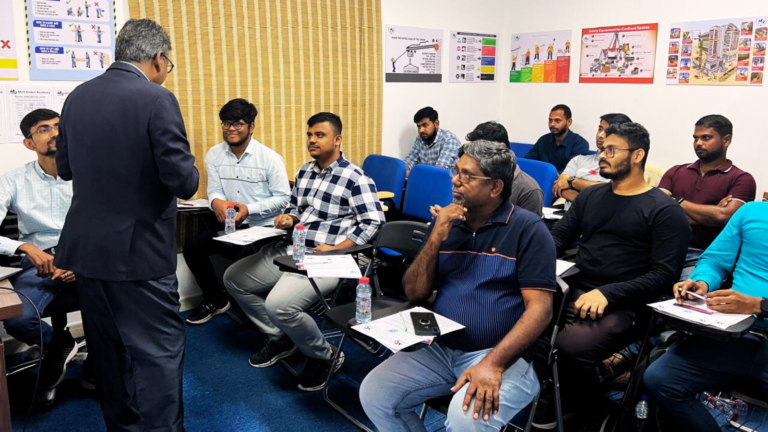
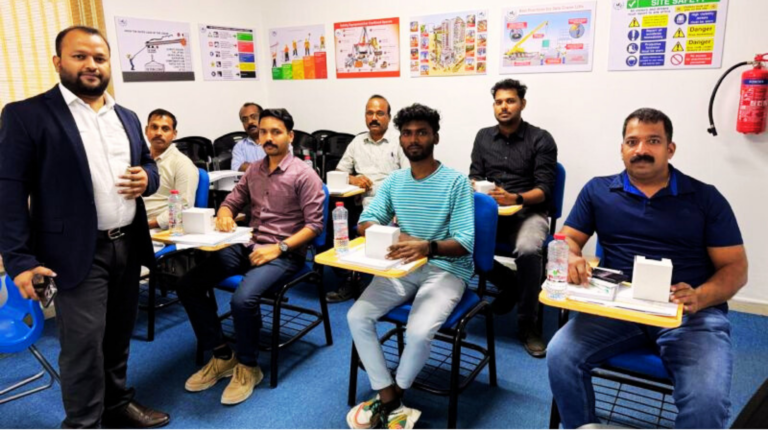
Advanced training dives deeper into emergency scenarios. You’ll practice with realistic simulations, learn advanced CPR techniques, understand medication administration basics, and gain confidence handling multiple casualties. M2Y Safety Consultancy structures these courses around real-world UAE workplace scenarios, making the training immediately applicable.
Pediatric First Aid Training
Duration: 6-8 hours
Ideal for: Parents, childcare providers, teachers, coaches
Cost range: AED 700 – AED 1,000
Children aren’t just small adults—their emergencies require specialized knowledge. This course focuses on infant and child CPR, choking response for different age groups, fever management, and dealing with common childhood injuries.
Occupational First Aid (Workplace Certified)
Duration: 2-3 days
Ideal for: Workplace first aiders, safety officers, HR managers
Cost range: AED 1,500 – AED 3,000
This comprehensive certification meets UAE labor law requirements for workplace first aiders. It includes everything in advanced first aid plus record-keeping, legal considerations, workplace hazard assessment, and how to set up effective emergency response systems.
First Aid Training Comparison Table
| Training Type | Duration | Investment (AED) | Certification Validity | Best For |
|---|---|---|---|---|
| Basic First Aid | 4-8 hours | 500 – 800 | 2 years | General public, low-risk environments |
| Advanced First Aid | 2-3 days | 1,200 – 2,500 | 3 years | High-risk industries, outdoor professionals |
| Pediatric First Aid | 6-8 hours | 700 – 1,000 | 2 years | Parents, childcare workers, teachers |
| Occupational First Aid | 2-3 days | 1,500 – 3,000 | 3 years | Workplace first aiders, safety officers |
| CPR & AED Only | 3-4 hours | 400 – 600 | 1 year | Quick refresher, focused skill development |
What You'll Actually Learn (And Why It Matters)
Let’s break down the core components of first aid training and their real-world applications.
CPR: The Skill That Restarts Hearts
The scenario: Someone collapses at your office. They’re not breathing. Their heart has stopped.
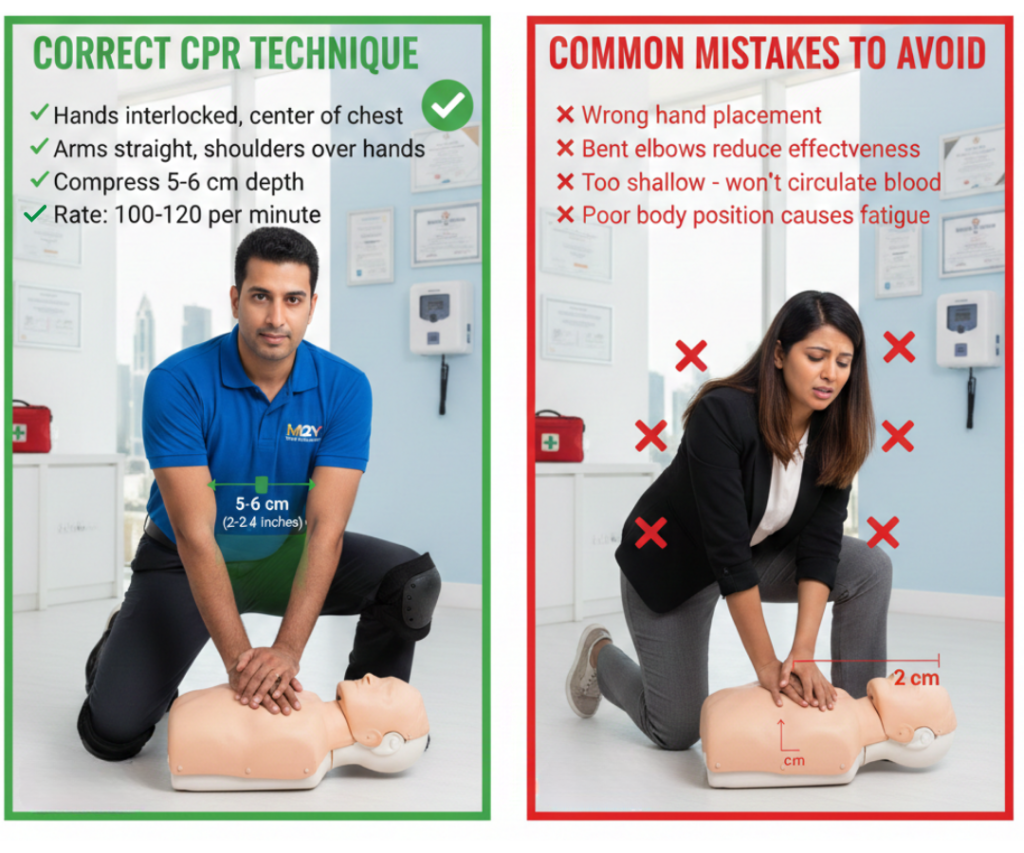
What you’ll learn: How to perform chest compressions at the correct depth and rate (100-120 per minute), deliver rescue breaths effectively, and use an AED. The American Heart Association reports that immediate CPR can double or triple survival chances from cardiac arrest.
Why it matters: The brain starts dying after just 4-6 minutes without oxygen. Ambulances in Dubai are excellent, but they still need time to arrive. YOU are the difference.
Bleeding Control: When Seconds Count
Heavy bleeding can lead to shock and death within minutes. You’ll learn the pressure point technique, proper bandaging methods, and when to use a tourniquet (yes, they’re making a comeback in first aid protocols).
During a recent training session in Abu Dhabi, a participant shared how he used these exact techniques when his neighbor severed an artery while doing home repairs. “I didn’t think—I just acted like we practiced,” he told me. “The doctor said those first few minutes saved his life.”
Choking Response: The Heimlich Maneuver
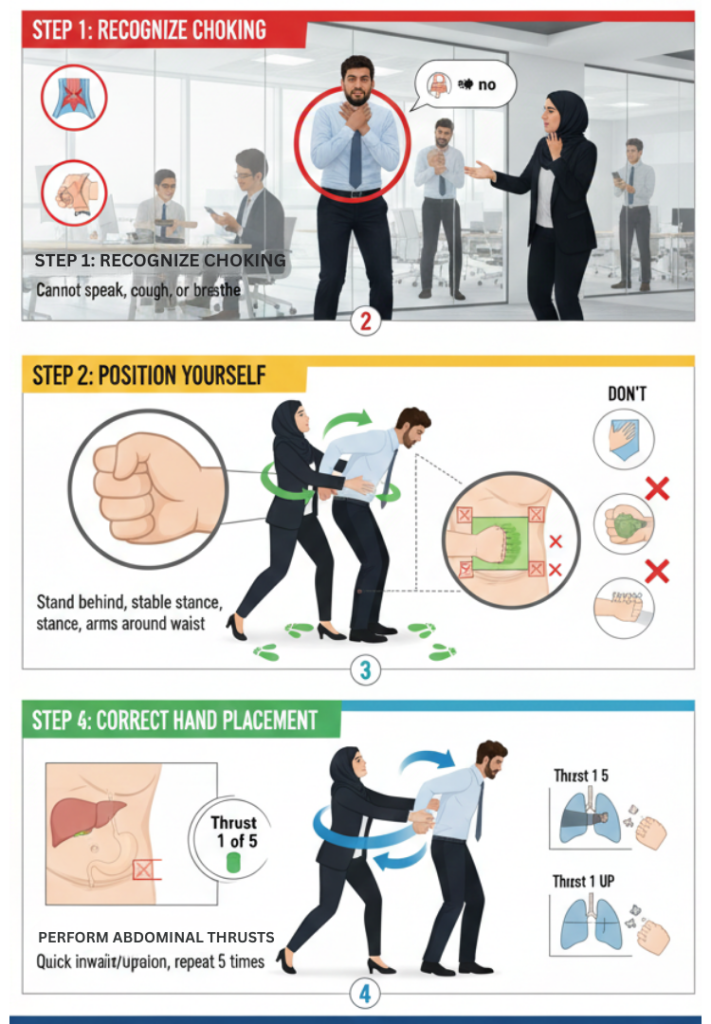
Choking kills quickly and silently. You’ll practice back blows and abdominal thrusts on training manikins until the movements become muscle memory. We also cover the critical differences between responding to a conscious versus unconscious choking victim.
Cultural note for UAE training: We ensure instructors understand that physical contact in emergency situations is permitted and necessary, even in conservative contexts. Saving a life takes precedence.
Burn Treatment: Busting Dangerous Myths
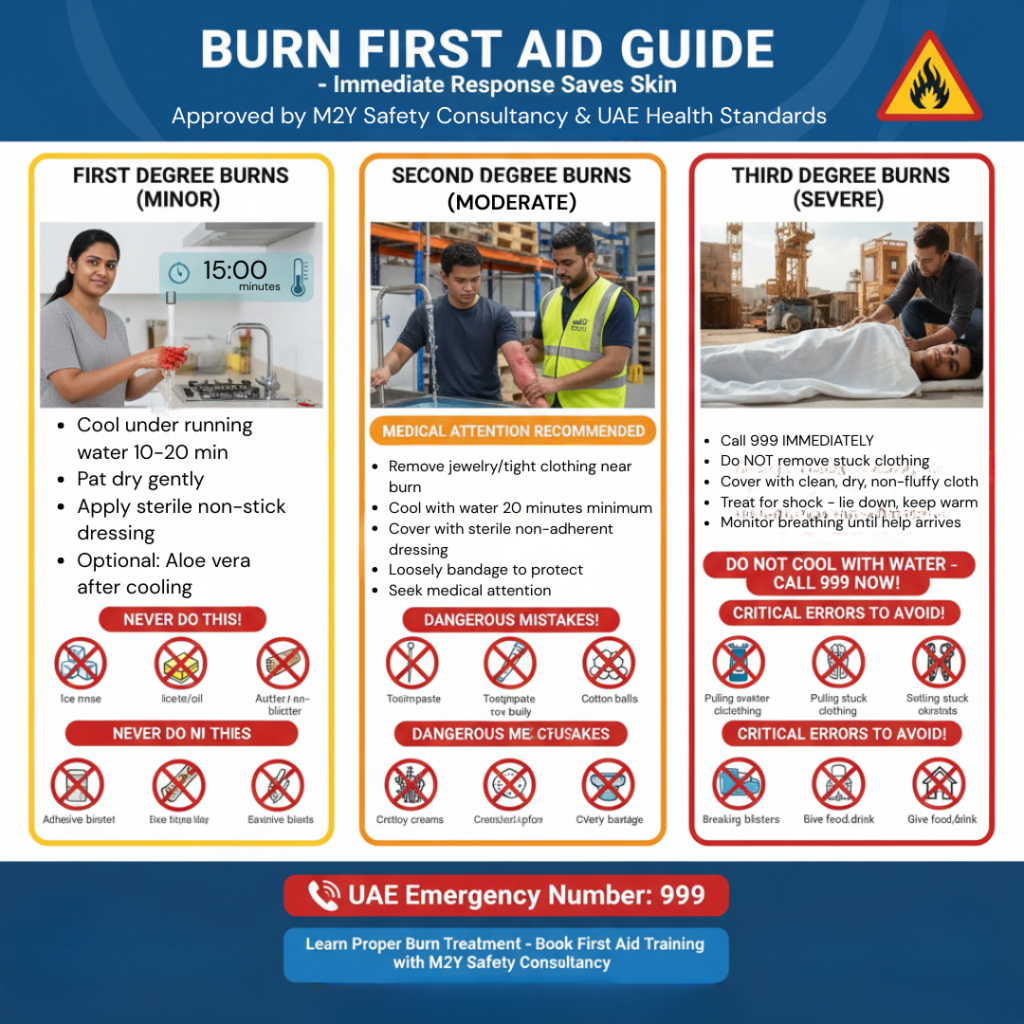
Forget everything your grandmother told you about butter on burns. Modern first aid training teaches evidence-based burn care: cool running water for 10-20 minutes, covering with clean non-stick dressings, and recognizing when professional care is essential.
In the UAE’s industrial sectors—particularly oil and gas—thermal and chemical burns are serious risks. Proper initial treatment dramatically affects recovery outcomes.
How to Choose the Right First Aid Training Provider in Dubai
The UAE has dozens of first aid training providers. Some are excellent. Others… not so much. Here’s how to separate quality training from compliance theater.
Accreditation Matters
Look for courses certified by internationally recognized bodies:
- American Heart Association (AHA)
- Red Cross / Red Crescent
- Health and Safety Executive (HSE) UK
- St. John Ambulance
M2Y Safety Consultancy maintains multiple international accreditations, ensuring your certification is recognized globally—crucial if you’re in the UAE’s mobile workforce.
Practical Training Over PowerPoint
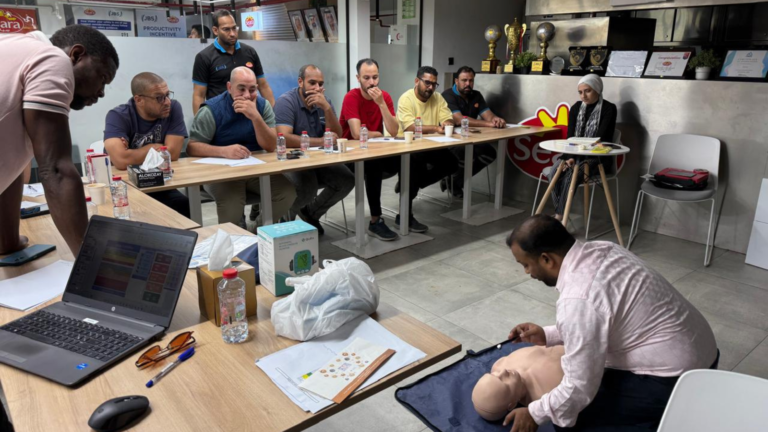
Ask about the practical-to-theory ratio. The best courses spend 70% of time practicing on manikins, applying bandages, and running through scenarios. If someone’s describing a course that’s mostly videos and presentations, keep looking.
Instructor Experience
Your instructor should have real-world emergency experience—not just teaching credentials. At M2Y Safety, instructors come from paramedic, nursing, and emergency response backgrounds. They’ve applied these skills under pressure, and that authentic experience shows in their teaching.
Class Size
Smaller is better. In a class of 20+ people, you won’t get adequate hands-on practice. Aim for courses with maximum 12-15 participants per instructor.
Refresher Support
First aid skills fade without practice. Quality providers offer refresher sessions, online resources, and quick reference materials to help you maintain competency between certifications.
First Aid Training Dubai Cost: What's the Investment?
Let’s talk money. First aid training in Dubai costs vary based on course depth, provider reputation, and group size.
Individual enrollment:
- Basic courses: AED 500 – AED 800
- Advanced courses: AED 1,200 – AED 2,500
- Specialized training: AED 1,500 – AED 3,000
Corporate group rates (typically 10+ participants):
- Often 20-30% less per person
- On-site training available (saves travel time)
- Customizable to your industry’s specific risks
Is it worth it? Consider this: A single workplace accident resulting in lost time can cost your business tens of thousands of dirhams in productivity loss, compensation, and potential fines. One trained first aider who responds quickly can prevent that escalation.
For families, the value is simpler: What’s your child’s life worth? Your spouse’s? Your own?
Legal Requirements for First Aid Training in the UAE
Here’s what UAE labor law actually requires:
According to Federal Law No. 8 of 1980 (UAE Labor Law) and subsequent Dubai Municipality and Abu Dhabi Occupational Safety and Health System Framework (OSHAD) regulations:
- Workplaces with 25+ employees must have at least one trained first aider
- High-risk industries require one first aider per 50 workers
- First aid kits must be maintained and accessible
- First aiders must hold valid, recognized certifications
Non-compliance isn’t just risky—it’s expensive. Fines range from AED 5,000 to AED 50,000 depending on violation severity.
But forget compliance for a moment. The real question is: Do you want your colleague, employee, or family member to be the statistic that could have been saved?
Common First Aid Scenarios in the UAE (And How Training Helps)
Heat-Related Emergencies
With summer temperatures that could cook an egg on the sidewalk, heat exhaustion and heat stroke are serious risks for outdoor workers, tourists, and even residents caught off-guard.
What first aid training teaches: Recognizing early symptoms (heavy sweating, weakness, dizziness), moving the person to shade, cooling techniques using water and fans, and the critical difference between heat exhaustion (serious) and heat stroke (life-threatening emergency).
Road Traffic Accidents
The UAE has made tremendous progress in road safety, but accidents still happen. The World Health Organization notes that road injuries are a leading cause of death globally, and the first person on scene often makes the biggest difference.
What first aid training teaches: Scene safety assessment (you can’t help if you become a victim), spinal injury precautions, controlling bleeding, and providing care without moving casualties unnecessarily.
Cardiac Events
Heart attacks don’t discriminate by age or fitness level. Stress, heat, and underlying conditions can trigger cardiac events anywhere—offices, malls, mosques, homes.
What first aid training teaches: Recognizing heart attack symptoms (they’re different in men and women), keeping the person calm and positioned correctly, and administering CPR if they lose consciousness.
Six Frequently Asked Questions About First Aid Training
Most first aid certifications remain valid for 2-3 years, depending on the course level. Basic first aid typically requires renewal every 2 years, while advanced certifications may last 3 years. However, best practice recommends annual refresher training to maintain sharp skills, even if your certification hasn't technically expired.
Blended learning works best. Some providers offer hybrid courses with online theory components followed by mandatory in-person practical sessions. However, purely online first aid certifications aren't recognized by UAE authorities for workplace compliance. You simply cannot master CPR chest compressions or practice wound bandaging through a screen. M2Y Safety Consultancy offers flexible scheduling for in-person training across Dubai and Abu Dhabi.
The core curriculum remains identical—life-saving techniques don't change by emirate. However, OSHAD (Abu Dhabi's occupational safety framework) has specific requirements for workplace first aid that are slightly more stringent than Dubai Municipality regulations. Quality training providers like M2Y Safety ensure courses meet or exceed requirements across all emirates.
Yes. The UAE Ministry of Education requires that schools maintain trained first aiders on staff at all times during school hours. Teachers and administrative staff working in educational settings should hold valid pediatric first aid certification specifically, as children's emergencies require specialized knowledge.
If it's from an accredited international body, yes. Certifications from the American Heart Association, Red Cross/Crescent, or HSE (UK) are recognized globally. This matters significantly in the UAE where professional mobility is common—you might work in Dubai today and Singapore tomorrow. Always verify your training provider's international accreditations.
UAE law provides Good Samaritan protection for people providing emergency assistance in good faith. If you've received proper training and act within your competency level without gross negligence, you're legally protected. The real risk isn't trying and making a minor error—it's not trying at all when you could have helped.
Why Choose M2Y Safety Consultancy for First Aid Training
When you’re learning skills that might save your colleague’s life, your child’s life, or your own life, the training provider matters enormously.
M2Y Safety Consultancy brings over a decade of safety training experience across the UAE. Here’s what sets our first aid training apart:
Internationally Accredited: Our courses meet American Heart Association and international standards, ensuring your certification is recognized anywhere in the world.
Real-World Experience: Our instructors aren’t just teachers—they’re former paramedics, emergency room nurses, and safety professionals who’ve responded to actual emergencies.
Industry-Specific Training: We customize scenarios for your sector. Construction teams practice different emergencies than hotel staff or office workers.
Flexible Scheduling: Weekend courses, evening sessions, and on-site corporate training designed around your schedule—not ours.
Ongoing Support: Access to refresher materials, quick-reference guides, and consultation support even after your certification.
Multilingual Instruction: Courses available in English, Arabic, and Hindi to ensure everyone fully understands life-saving techniques.
Taking the Next Step: How to Book Your First Aid Training
Ready to invest in skills that last a lifetime? Here’s your action plan:
For individuals:
- Visit M2Y Safety Consultancy to review current course schedules
- Choose between basic or advanced certification based on your needs
- Register online or contact the team directly for course details
- Attend your training session (bring comfortable clothing)
- Receive your internationally recognized certification
For businesses:
- Contact M2Y Safety for a workplace first aid needs assessment
- Determine how many first aiders you legally require (and how many you should have)
- Schedule on-site or facility-based training
- Implement the emergency response procedures you’ll learn
- Set up annual refresher training to maintain sharp skills
Don’t wait for an emergency to realize you needed this training yesterday. Every day you postpone is another day you’re unprepared for the unexpected.
Final Thoughts: The Real Return on Investment
I’ve trained thousands of people in first aid over the years. Some take the course because their employer requires it. Others come because they once witnessed an emergency and felt helpless. Parents arrive worried about their children. Managers want to protect their teams.
But here’s what they all have in common afterward: Peace of mind.
They leave knowing that if someone collapses at the gym, if their child chokes at dinner, if a colleague has a heart attack, if a stranger gets hurt in a mall—they won’t freeze. They’ll know exactly what to do.
That confidence? Priceless.
The life you save might be a stranger’s. It might be a coworker’s. It might be your parent’s, your spouse’s, your child’s. When that moment comes—and statistically, it will—you’ll either be ready or you won’t.
Make the choice today that you’ll thank yourself for tomorrow.
Book Your First Aid Training Today
M2Y Safety Consultancy offers comprehensive first aid training throughout Dubai, Abu Dhabi, and across the UAE. Whether you need basic first aid certification, advanced workplace first aid, or specialized pediatric training, we’ll equip you with skills that save lives.
Contact us today:
- 📞 Call for course schedules and group rates
- 🌐 Visit https://m2ysafety.com/ for detailed course information
- 📧 Email us to discuss customized corporate training solutions
Your journey to becoming someone who can make a life-or-death difference starts now. Don’t wait for an emergency to wish you’d taken this step sooner.